Check out all the #FITSPO tags on Instagram.
Are these types of photos helpful? Harmful? Unrealistic?
I’m asking for a story I’m writing for Greatist. Any help/comments would be SUPER appreciated.

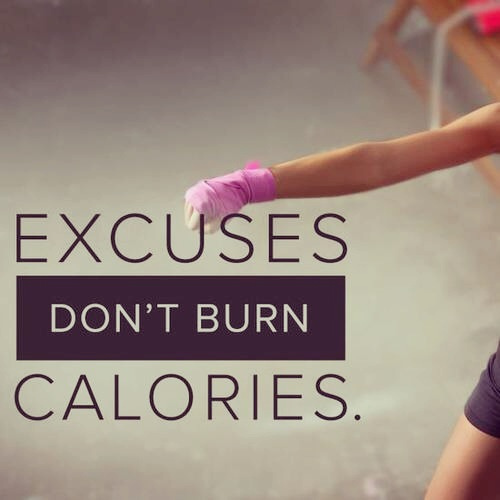
Check out all the #FITSPO tags on Instagram.
Are these types of photos helpful? Harmful? Unrealistic?
I’m asking for a story I’m writing for Greatist. Any help/comments would be SUPER appreciated.

I’ve come to love working out in the morning.
Even though I have to physically drag myself out of bed and set three alarms so I don’t snooze through my wake-up call, exercising first thing in the morning sets me up for a better, more productive day.
My workout always varies: Sometimes I run solo outside; other days, I meet my workout group for a free boot camp in the park. In the summer, I regularly swim laps at a recreational outdoor pool. And less frequently, I’ll take a drop-in fancy fitness class at a local studio, reluctantly paying the (outrageous) price and packing a bag the night before, so I can shower and head straight to work afterward.
I follow this exercise “plan” four seasons a year, and except for torrential downpours and blizzard-level snowfalls, I try not to let the elements outside dictate my schedule. After all, an 8-mile run is just as far in crappy weather as it is on a sunny day. And as a person who is constantly training for the next marathon or triathlon, I’m all too familiar with the fact that a training plan waits for no one.
This strategy was working out just fine—until I signed up for a two-week introductory period of ClassPass a few months ago.
Read the full story on Greatist.com
2015 was a big year.
Not just for my athletic endeavors, but also for my career and even my love life! Here’s what I’m most proud of accomplishing, and most excited about sharing, in 2015.


(This post was originally published on Thrillist — and was written by yours truly)
Milk, for most adults, is more of a condiment than a main attraction: half-and-half in coffee, whole milk over cereal, and so on. Since you’re not guzzling glasses of milk like you did when you were 6, keeping it fresher for longer is in your best interest.
If you’ve noticed a discrepancy between the shelf life of organic milk and regular milk, you’re not alone. But why is that the case, given that they’re both milk, after all? We scoured the dairy world and found the experts who could give us an answer. Continue reading “ORGANIC MILK LASTS SO MUCH LONGER THAN REGULAR MILK. WHY IS THAT?”
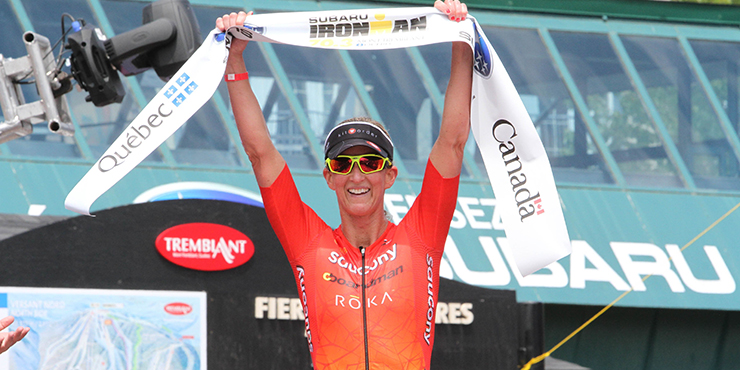
If you’ve ever witnessed the finish line at a triathlon —especially a long distance triathlon race right before the seventeen hour cutoff — you were probably exposed to a wide range of raw human emotions.
Once past the finish line, some athletes are in a state of euphoric jubilation, and others are crumbled in intense agony from putting their body through something that it was not necessarily meant to do. The long distance format of an Ironman consists of a 2.4- mile swim, 112-mile bike, and a 26.2-mile run. This event is not for the faint of heart. (Don’t worry: there are many races below these epic numbers for the beginner triathlete!).
Spectating a race could cause you to catch the triathlon bug, envying the experiences of the athletes as you witness them finish the race in a heap of emotion. If you are moved to compete, jump in with two feet and start your journey! To help you on your path, we asked Meredith Kessler, eight-time Ironman champion who will be competing in her 55th full Ironman race at the Kona World Championships in October (and hoping to be the first American-born female athlete to win the title since 1985!), to recommend five things first timers should know about doing triathlons. Continue reading “5 Things You Should Know Before Your First Triathlon (From Pro Athlete Meredith Kessler)”

Sometimes, we all go a little too far — in life, in love, and for some of us, especially in training. As someone who takes pride in pushing herself, even I reached a point in May where even I had to acknowledge I’d taken measures to an extreme, in a not-so-great type of way.
After months and months of training for the Boston Marathon (my 2014 recap is here… still working on the 2015 recap!), I finished the 26.2-mile race in a personal best time for the course. (Yay!). Yet after just one weekend off, I was back to the grind: I completed a 10k with an elevation gain of 1,212 feet in Bear Mountain State Park, then set off to Cape Cod for the all day/all night Ragnar Relay, where I ran just under 35 miles in 24 hours.
And I wasn’t done yet! One week later I ran the Brooklyn Half Marathon, a race I had to scramble to buy a bib on Craigslist…then finished in a disappointing time, in pain.
By the time I crossed the finish line along the Coney Island boardwalk, I was mentally and physically exhausted. A pain was creeping up my left knee, and both my hips ached.
The last thing I needed was an injury, but what did I expect? I’d just broken every rule in the recovery book. My runner’s high was running out, and I had officially given my friends and co-workers who labeled me “crazy” a legitimate reason to do so.
So I set out to rest for a few weeks. And I did. Try, I mean. Really. But as most runners and athletes know, not training for something is often worse than training for a specific race, even if you’re tired. So when I heard that a group of friends were signing up for triathlons, I started toying with the idea of registering for one myself.
I’d swam as a kid at my local swim club (thanks mom!) and I’d once biked 26 miles with my high school gym class … so how hard could a tri really be, right? After some encouragement from a few buddies, I signed up for the Lake George Half Ironman, a course boasting a 1.2-mile swim, 56-mile bike, and 13.1-mile run in upstate New York.
Well, I was wrong about the “easy” part — riding a road bike is completely different than the mountain bike I’d used to commute in college, swimming might be the most exhaustive sport, ever, and running after both of these events is a feeling I cannot even describe into words.
However, what I did find is that by training with three sports instead of the usual, “run every damn day” workout routine I was previously doing, was that my body didn’t feel overly strained in one specific area anymore. Plus, mixing up my workouts was fun. I wasn’t dreading my next sweat session — as long as you don’t count the 5am wakeup call — or feeling exhausted before I even put my sneakers on.

I completed my first Triathlon Sprint in Connecticut this July as a “warmup” for the big race (Lake George). The Greenwich Cup’s half mile swim, 15-mile bike and 3-mile run was a refreshing change up from my beloved marathon. I even came in second for women in my age group, which, as SNL’s version Hannah Montana would say, is, “Pretty cool.”
Now, all that’s left to do is conquer the half ironman distance, without forgetting the real reason I compete in endurance events to begin with: Because it’s fun, because I get to train with amazing people, and because I like proving to myself, and to others once in awhile, that I’m strong and capable of conquering challenges — both big and small.
Stay tuned for a race recap, and leave any advice/words of wisdom in the comments below.

Check out my latest piece on Greatist.com: The 50 Best Races in America, State-by-State! Read it here.
To hold you over while I get my act together, here’s a review of The Mile High Run Club I wrote for Blisstree.com:

To be honest, I’ve only ever been to one SoulCycle class. It was almost over a year ago, and all I remember thinking was that I couldn’t believe people paid upwards of $30 to take the class, all the time. People spend hundreds and hundreds of dollars on their SoulCycle addiction, when IMO, other cycling studios are just as good, if not better.
But it’s no secret that New York City has an unhealthy relationship with SoulCycle. So when I got news of a treadmill studio aiming to be ‘SoulCycle’s successor,’ I couldn’t help but roll my eyes. Really, with the SoulCycle again? But as a runner myself, I couldn’t resist wondering if it would be any better than the soul-sucking stationary bike. So I set off to find out!
Called The Mile High Run Club, the group treadmill studio opened in NoHo late this fall. With 30 Woodway 4Front machines, you can experience group, coached treadmill classes with ‘expertly’ structured intervals designed to help you reach your running goals. I took a lunchtime class via a gifted ClassPass Flex, and was surprised at the high number of people in my class—and there were even two men, which I find to be a rarity in many group fitness classes like SoulCycle.
The class I took was Dash 28…..
Read entire article on Blisstree.com
*Photo via Mile High Run Club’s Facebook page.

My first experience with the Boston Marathon was my freshman year of college. I filled my Nalgene bottle (a necessity back then) with cranberry juice and vodka, and went to cheer on the runners with my friends. I clapped at strangers and wore a Yankees baseball hat, for which I was ridiculed for by several passersby. I got excited when I saw my friend’s dad pass by unexpectedly, and I witnessed an elderly woman attempt to cross the street only to get stampeded by a runner too exhausted to stop in time.
Besides that, the whole day was pretty uneventful.
Yet my friends and I returned to watch the race year after year. “Marathon Monday,” it was called, and it was a celebration for all Boston college students, not to mention an excuse to day drink and yell (words of encouragement!) at strangers.
Things changed when my friends convinced me to run a marathon of my own right before graduation. We couldn’t qualify for Boston, but we flew to Nashville for the Country Music Marathon as a ‘last hurrah’ before getting our diplomas. As my first visit to the south, I realized the best way perhaps, to see a city, is to run 26.2 miles–or any distance, really–through it. And it was during that race that I finally figured out what a marathon was all about.
Strangers hold signs and their hands out for high fives from sweaty, wet, shaky palms. Runners and non-runners are pushed to their very breaking point. Individuals discover their true potential, and what they’re really made of. And the crowd supports them, because whether they are running for charity, in memory of someone, or for themselves; running that distance alone is incredible. So after we crossed that finish line and flew home, watching the 2012 Boston Marathon was a truly extraordinary and special experience for me. “I get it now,” I remembered thinking. “And someday that’ll be me.”
Last year’s 2013 race was the first in five years I was unable to stand on the sidelines and cheer. After graduating and moving back to my hometown in New Jersey, I no longer had the luxury of Patriot’s Day off from work. Yet I was still excited for the runners, and my younger friends still attending Northeastern who would be cheering them on.
But as we all know, the marathon did not go as planned. People were killed, and a city was in panic. Watching it all unfold from screens via newscasts, Twitter and text messages was eerily strange, weird and scary for me–as it was for the nation.
On any other year, I would be cheering alongside the other spectators, most likely near the finish line as it was close to my dorm. I had many friends who were in attendance, that day—and confined to their apartments during the manhunt that followed–yet luckily were spared from any serious harm.
Timing is everything though. And while it felt strange to miss such a big day in Boston history I would normally be at, I’m glad I wasn’t at that finish line.
Just a few weeks later, several of my friends from Boston and I took on the New Jersey Half Marathon and Marathon in Long Branch, NJ. We wore custom made, “NJ Runs for Boston” tank tops, and ran with the city and its people in our hearts. Along the course, I got emotional seeing the #BostonStrong signs along the route and runners who wore shirts designating they had been just 2, 1 or .5-miles away from the finish line in Boston before they were stopped.
Even though I struggled through the last 6 miles of that race, I ended up finishing with a time of 3:27:07–not only a Personal Record, but within The Boston Marathon’s qualifying requirements. I quickly forgot about all the cursing myself out in my head I’d done while I was painfully finishing the race, and switched to being elated about running Boston the following year.
After crossing the finish line in 3:30:26 on April 21, 2014, words can’t really describe the experience I had. Being back in Boston with the same friends I had traveled to Nashville with was so comforting to begin with, and prepping for the race (going to the expo, making pasta dinners, rolling our calves out with The Stick in the living room) felt like home. My phone blew up with text messages, Facebook posts and tweets from friends, family members and coworkers wishing me luck. To be honest, I’ve never felt more loved in my life.
As for the race itself, the excitement, anticipation, enthusiasm, respect from and for other runners, pride from Bostonians and its people, and resilience was overwhelming, awesome and powerful. Along the course, I had so much support from cheering spectators–from small children handing out water cups and high fives, to families holding out orange peels and necessity items like wet paper towels, to inspirational signs, to drunken frat boys and the Wellesley College scream (and kiss!) tunnel. There was never a dull moment in the course (I say that about the crowd, and the rolling hills!). It might be weird to say, but I enjoyed just about every sweaty, calf-burning minute of it…minus that awkward moment a man walked in on me in a Porta Potty right before the race.
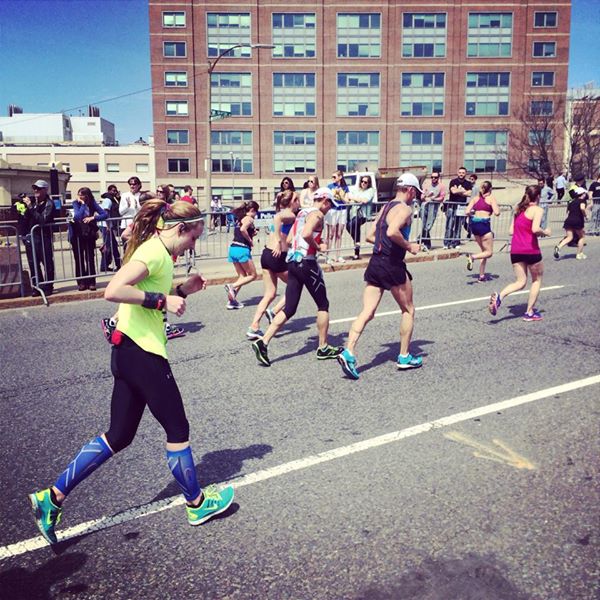
Though I wasn’t there for the tragic events of last year and cannot pretend to know or even imagine what it must have been like, I know in my heart that Boston has come back three times as strong, and nine times as proud. While the Boston Marathon has always been something special and amazing, it is now a symbol of a comeback–quite possibly, the greatest comeback this nation has ever seen.
I won’t pretend to associate myself with the runners who returned to the finish line in 2014 after being stopped in 2013 (and I admire those people to the fullest extent). But what I can say is, I’m proud to have gotten the opportunity to join them in their own personal comebacks. I’ll even wear my Solar Zest-colored marathon jacket with dignity!
I couldn’t walk normally for over a week, but the pain was well worth it. Just past the finish line, I think the smile on my face said it all: I could not be more honored to have been part of Boston’s big day.
Ain’t nothing wrong with acting like a bunch of animals…
We’re all a little animalistic sometimes. Maybe there’s a huge appetizer spread out at an event, and you haven’t eaten dinner yet, so you attack it. Or maybe you got kind of drunk last weekend and performed some outrageous moves on the dance floor you really wish had never happened. Whatever it is, we all have those same instincts. (Except maybe Gwenyth Paltrow. That lady is a robot without feelings).
So taking advantage and capitalizing on these intrinsic, universal qualities, Equinox came up with the idea for Animal Flow, an entire workout devoted to our inherited wild side. At first, I laughed at the idea. All I could imagine was the scene of Mean Girls at the mall, where the girls fight like wild African animals around the watering hole (well, the water fountain that symbolized the watering hole). But since I was invited to try out the class, I decided to give it a try. At the very least, I’d learn how to master a catfight. Right?
I was wrong. Animal Flow is actually one beast of a workout. Using nothing but our own weight and sliding discs, we got a total body workout that had us mimick animal movements without getting too ridiculous. And with tribal, drum-heavy music fueling the session, it was easy to get into the spirit of things.
Much of our movement focused on various degrees of crawling, or different positions on all fours, squatting and jumping. The two “go to” positions; “Beast” and “Roaring Beast,” had us in a crouched, suspended plank that took everything from my arms, to abs, to thighs working hard to stay in position. There was even a portion of the class where we had to crawl 10 steps forward and back in “Beast” mode, which was one of the most difficult parts.
We spent the beginning of class learning the different movements and putting them together in shorter sequences, and at the end of the workout, we put all of the sequences together first in sets of two, and built progressively from there until our finale.
It’s definitely not your typical fitness class. But despite the name and my expectations surrounding an Equinox specialty class (I kind of expected it to be a tribal-themed Zumba class?), Animal Flow provides a challenging, total-body workout that will keep you sweating and working until the last jump. Try it out – and unleash the beast in you!
 Run From Your Problems
