6 Tips For Passing the NPTE On Your First Attempt

I took the NPTE in July 2023 after graduating from the University of Southern California in May. I dedicated a lot of time to my studies, and was fortunate enough to pass on my first attempt. However, while preparing for my test, I found that the simple act of choosing a study strategy can be overwhelming. There’s SO much information available when it comes to what study materials to use, how many practice tests to take, and how many hours per day, or week, to study in general. 

Throughout my months of preparation — often doubting my own study strategies — I found it was helpful to read about other people’s experiences and what was successful for them. One blog in particular I found helpful was The Curly Clinician, who motivated me to share my own tips for preparing for the exam.

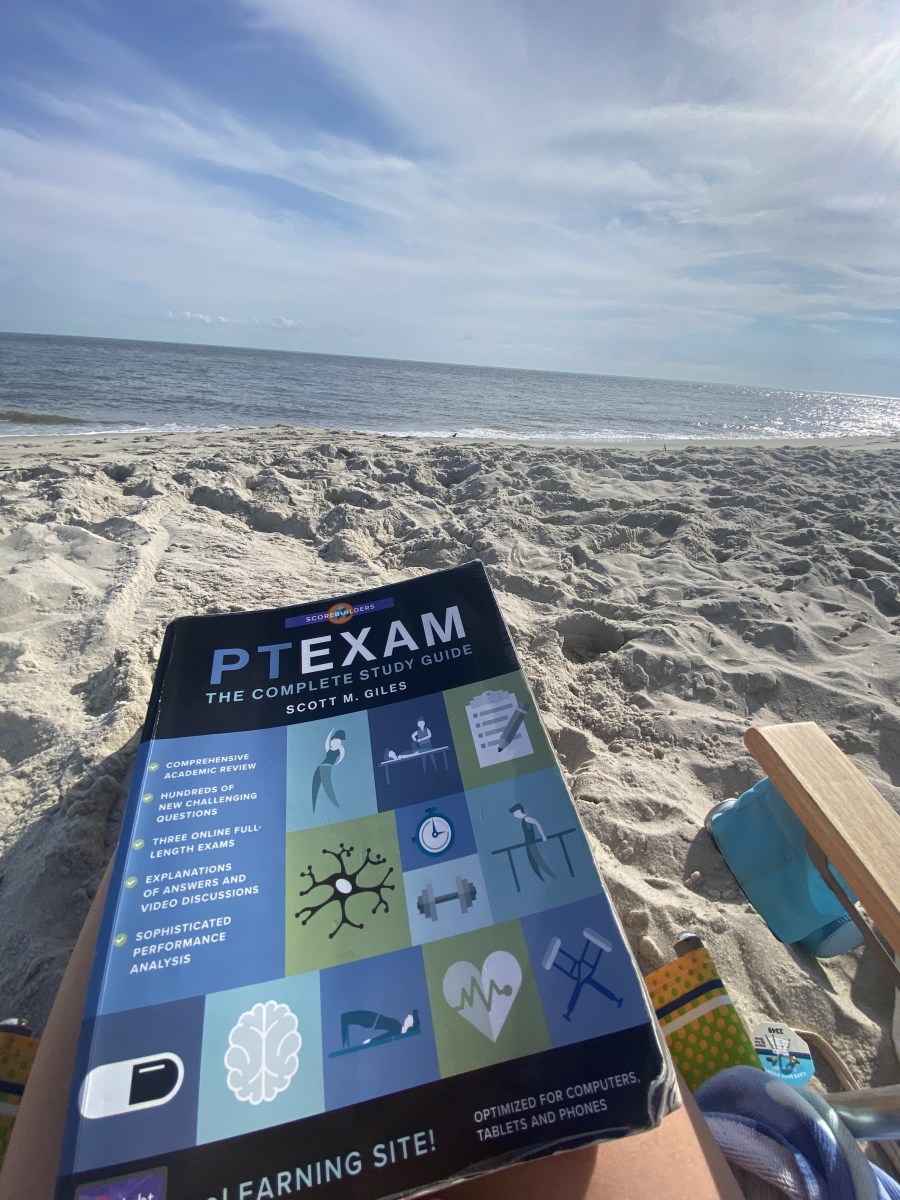
First, I began by reviewing the Scorebuilder’s book, front-to-back. This was tedious and boring, and I wasn’t sure if I was retaining information at all. I broke up reading page-after-page by integrating the below strategies.

DISCLAIMER: What works for one person might not work for others! Yet I wanted to share my study strategy for others researching the best NPTE study methods. Feel free to take away what you need to, and ignore what you don’t!

Here are 6 things I did that helped me nab that 600+ score.

1. I joined a study group

I knew I would need motivation to study day after day, so when a friend/classmate asked if I wanted to meet regularly via Zoom, I said YES. We formed a small study group of four and met twice a week from mid-June through the week before the test for about 1-2 hours, taking turns teaching one another NPTE content. Not everyone made every meeting, but there were always at least two of us in attendance. We created a Google Doc filled with topics to cover, and collaborated on a massive Google Slide project to cover the material. 

While it was tedious to make Google Slides and practice questions for my study partners, I really grew to understand and know the subject matter I was presenting, and it became ingrained in my brain. Plus, listening to my classmates explain a concept was WAY more interesting and memorable than reading it in a textbook. 

We also had fun with it, and lots of laughs (and eye rolls, concerns, freak outs, frustrations, etc) were shared! I highly recommend joining a study group, as you can all benefit from one another’s strengths and experience. 

2. I listened to Kyle Rice’s NPTE Clinical Files Podcast Daily

From mid-June to mid-July, all of my long car rides and runs were accompanied by episodes of Kyle Rice’s Clinical Files podcast. Rice not only takes the time to fully explain concepts, but he also makes his episodes fun, engaging and relevant. He celebrates your wins with you and motivates you to keep learning when you are incorrect. I found myself really engaging with his material and retaining important concepts, as well as getting great practice question exposure.

I would pause the episodes and sometimes replay the question 2-3x, but I would always make myself answer before listening to his explanations, which I recommend to anyone else using his material to learn! Arguably the best part is his pep talks at the beginning and end of each episode, which I recommend NOT fast-forwarding through.

3. I made flashcards and used them to review material

One thing about me is that I’m a super visual person, so I would make flashcards with concepts I was having trouble retaining, and go on ‘flashcard walks’ in my neighborhood when I hit a wall while studying or just needed a break from the textbook. This allowed me to get some fresh air and remove myself from my computer screen for a while. I also felt like I learned and retained information simply from creating the flashcard itself.

During my last 2-3 weeks of studying, I started most mornings with 15-20 minutes of flashcards with my coffee (and most importantly, NO screens). I tried to end my days with flashcards as well, but often was too tired. 

4. I attempted at least 20 practice questions every day

After taking my first practice test and scoring lower than I would have liked (i.e., NOT passing) I panicked. I signed up for a TrueLearn account and also used my second Scorebuilder’s test and a retired PEAT I had gotten in PDF form for practice questions. I would try to answer about 20 questions every morning, and then review them before studying anything else. As someone who gets distracted easily, I would also turn to practice questions when I got sick of studying and reading the textbook.

I found my TrueLearn account to be incredibly helpful for this, as I could choose the number of questions I would get, and could also filter by category/topic. With over 2k questions to choose from, I never got a repeat question (unless I asked to be quizzed again on questions I got wrong!). I believe I learned better and retained more information by getting questions wrong, so this was more effective than just reading the textbook.

In the last 2-3 weeks of my studies, I would use my TrueLearn account to quiz me specifically on concepts I KNEW would be covered (cranial nerves, specifically V vs. VII) and those I was having significant trouble with (amputations and gait impairments associated with amputations). 

5. I took advantage of free resources

I downloaded the PT 365 app to answer a free test question every day, downloaded Kyle Rice’s free cheat sheets and study guides, and joined a free Final Frontiers jeopardy session the week before the test. I definitely recommend joining Kyle Rice’s free Facebook group (the PT Hustle) and the Final Frontiers’ free Facebook group for additional resources and practice questions.

6. I took my practice tests seriously, and spent time reviewing them

I took several practice tests, including a PT Final Exam practice test, two PEATs through the FSBPT website, one Scorebuilders test, and two PEATs in pdf format. While I did not take every test super seriously, I took both PEATs through the FSBPT website and both PEATs in pdf format in “test mode” — AKA acted like it was a ‘real’ test, with the time limit enforced in a quiet room by myself. I have to admit that I was very tempted to just take practice tests all the time, because I was eager to see how I would do. But I can’t emphasize enough how it’s important to be patient and take the time to actually study and review concepts. It’s also incredibly important to take the time to review each practice test and understand if there are any subject areas you’re performing poorly in.

I also would like to note that I never “passed” or got over a 75% on a Scorebuilders or PT Final Exam practice test, so don’t worry if that is also the case for you.

Since PEATs are the most relevant, I’ll share those scores with you, as well as my final passing score.

Here are my stats:

  • Review Series 2 Form A (Retired Form) taken 6/26/2023: Score 136/200, 68% (On track to pass score: 136)
  • Review Series 2 Form B (Practice Form) taken 7/22/2023: Score 163/200, 82% (On track to pass score: 143)
  • PEAT #1 pdf: 72%
  • PEAT #3 pdf: 80%
    • (I took these both in between my FSBPT PEATs but do not remember specific dates. The percentage score is out of 500, so I’m unsure what it would have been out of 800).
  • NPTE Exam taken 7/26/2023: Score 699/800 – PASSED!

***

To be 100% honest, the worst part of this entire process was waiting for scores to come out. The day they were released, my score didn’t come out until 6:30 pm EST even though I saw LOTS of people getting their scores HOURS earlier. If this happens to you, try to find a way to distract yourself and stay off the Internet.

My best advice is to trust yourself, trust the process, and try to find some joy in your studying! Good luck! 
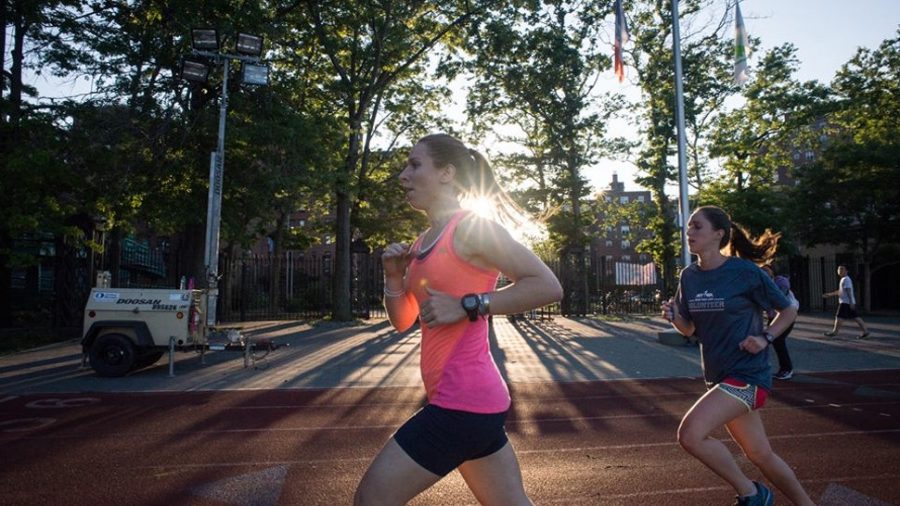
10 New Year’s Running Resolutions That Have NOTHING to Do With Your Pace

“Get faster” is the “lose weight” of running resolutions — am I wrong?

If you want to use the start of 2022 as motivation to PR your next race, that’s amazing. But for many of us, it’s unrealistic. 

It’s a resolution without a plan that is often too generic to actually accomplish, and will only lead to disappointment and frustration. 

Plus, if you actually get faster but don’t qualify for Boston or PR on race day, your entire process and effort can feel meaningless, even if you’ve made solid improvements and have demonstrated growth. 

That’s why I’m challenging you to choose a different running resolution this year.

Here are 10 New Year’s running resolutions that have nothing to do with your pace.

1. Tackle A New Distance

While running a marathon will always be impressive, 2022 could be the year you bust out of your marathon rut and try a new or unfamiliar distance. The pros? You’ll PR instantly, for one. You’ll switch up your training regime. And you’ll challenge your body to do something new and different! For me, my “new” distance will be the 10k. Even though it’s not completely new, it’s definitely unfamiliar and I’m excited to see how it goes.

2. Strive To Be More Consistent

I train a lot of athletes where the potential for major running improvements is right there — if only they could be more consistent with their training. By more consistent, I mean actually sticking to a training schedule, or saying you’ll run three days a week and actually doing so. It means planning for the unexpected, setting a reasonable goal for days of running per week, and ditching the excuses.

3. Take On A New Vert

For the “extreme” types reading this list, why not make it your mission to get more VERT this year? This could involve signing up for a race with a ton of vert (hello, Double Dipsea, Red Bull 400 and Loon Mountain Race) or creating a weekly or monthly vert goal. This takes the pressure off speed, but will really help you build your power in 2022.

4. Commit To A Weekly, Monthly or Yearly Mileage Goal

On Christmas, my uncle (a cyclist) told me he was less than 50 miles away from completing his 4k mileage goal, which he could easily accomplish with 1 or 2 more rides before December 31st. I was proud (and also envious)! Having a yearly mileage goal is something you can work on all year and slowly chip away at. For individuals with shorter attention spans, weekly or monthly mileage goals are great way to challenge yourself and stay consistent, too. 

5. Try A Run Streak

A run streak is not for everyone, and I definitely understand the power of the rest day. But for some individuals looking to improve consistency and up their mileage, a run streak could be a great way to kick off the New Year. You don’t have to hold it for a crazy amount of time, but even just kicking off January 2022 with 31 days of running is a feat within itself!

6. Strength Train More

This is a goal that all runners can (and should) get behind — myself included. Running requires a ton of work from multiple muscles and muscle groups, and if you have any significant weaknesses, I can guarantee it will eventually amount to some type of injury. Visiting a direct-access physical therapist to help identify strength deficits is a great way to start. They can then help you with exercises and a training plan to get you back on track and prevent injuries before they begin!

7. ‘Just Show Up’ To That Running Group You’ve Been Watching on Instagram

Joining a regular running group can do a ton for your running consistency, motivation, and your morale. Not only is it great to be in a group of like-minded individuals chasing their goals, it’s also helpful to find other runners who you can chase or challenge during workouts so you both get stronger. You’ll likely find some new training buddies, and hopefully some new friends.

8. Challenge Yourself To More Speed Workouts

While this goal may result in getting faster, it’s more about the process of actually finding, committing to, and performing speed workouts than the endgame. This may require a little bit of research and planning, including finding a track, running path or treadmill access, but the juice is definitely worth the squeeze.

9. Improve Your VO2 Max

VO2 Max is the maximum amount of oxygen your body can consume during exercise. Basically, the higher your VO2 max, the more physically fit you are. This resolution may not be accessible for everyone, but if you have access to the equipment, it’s a great way to challenge yourself and improve your aerobic capacity. You can also estimate your VO2 max using your heart rate with the Rockport Walking Test or Single-Stage Submaximal Treadmill Exercise Test

(Fun story: This year in my Exercise Physiology class, my professor offered $100 to anyone who could score over 60 on the Vo2 Max test. I scored a 58.9 — and was SO exhausted (and frustrated to have missed it!). So obviously I have been running hill repeats on the treadmill at the gym every week since!)

10. Try Mindful Running

Again, this resolution isn’t for everyone, but it’s a great way to get back in touch with your love of running as well as to clear your mind on the go. You can practice mindful running by ditching your watch or covering it up during a run and not paying attention to the numbers, by choosing a meditation you can listen to on a treadmill run, or by simply choosing a theme for your run and choosing to proactively think about it along your route. There’s no wrong way to do this. 

***

Running is different for everyone, so whatever your goals for the new year are, be proud of them and don’t compare yourself too harshly to others.

Cheers to a great year of running in 2022!

A Run Coach Explains How To Safely Start A Running Regime While Quarantined

It’s amazing to see so many people embrace running as they face quarantine mandates and practice social distancing due to the COVID-19 outbreak. Running has always been a therapeutic outlet for me, both mentally and physically, and research shows that running boosts your mood, reduces stress, strengthens your immune system, and helps you sleep better. But as a RRCA-certified running coach, I do worry that a lot of people may be jumping into a running routine too quickly—and ‘too much, too soon’ is the perfect recipe for injuries. 

To help everyone looking to find refuge in running right now begin, or get back to, their practice in a safe and sustainable way, I put together a list of major DOs and DON’Ts to follow as you develop your personalized running routine. As an added bonus, I included a two-week ‘return to run’ training plan. Continue reading “A Run Coach Explains How To Safely Start A Running Regime While Quarantined”

On Body Positivity, During NEDA Month

I don’t talk a lot about body image–not because I don’t have thoughts on it, but because I don’t want to say the wrong thing or be insensitive. However, the fact of the matter is that I was incredibly insecure about my body for a long time. Unfortunately, I think this is an issue that affects everyone at some point: There’s always media images telling us what is and isn’t acceptable, and what is and isn’t considered to be beautiful. Now with social media, we are constantly exposed to “flawless” images of friends, models, influencers, and others–many of whom appear to be super confident about themselves and how they look. In part because of how much our lives are on display, I think it’s more difficult to today than ever before to become secure in your own skin. That’s why I want to talk about how running has affected my body image for the better—especially when there is so much already out there about the link between negative body image and running.

Here’s something I don’t usually admit: I originally started running to lose weight. In my early teenage years, I carried some uncomfortable extra pounds around my waist that at the time were probably just due to not hitting puberty yet, but in the moment, made me feel hideous. I didn’t love the person who looked back at me in the mirror. I hate to think that my relationship with something I love so much now began as a vain endeavor, but it did. The summer between eighth grade and my freshman year of high school, I cut out all snacks in between meals. I would eat a single Lean Pocket (lol, remember those?) for breakfast, and started running for 20 or 30 minutes in the evenings. At the time, I hated running, but I equated the practice with burning calories. Continue reading “On Body Positivity, During NEDA Month”

Running the 2019 NYC Half? I’ve Got A Plan For You

If you’re running the United Airlines New York City Half Marathon on March 17, 2019, and are a little lost when it comes to where to begin or how to train, I’ve got a plan for you!

Customized training plans tailored to your skill level and personal goals created by me (RRCA-certified running coach Erin Kelly) will be delivered to your inbox within ~3 business days.

Plans are $150 and can be payable via Venmo.

What are you waiting for? Sign up here to get a customized training plan today.


Here’s How To Commit To Your Next Race

Taking on the challenge of a new goal is no easy feat, but with the correct training and preparation, there’s an incredible opportunity to have a wonderfully rewarding experience. Of course, that’s not to say that taking on whatever distance you’ve set your sights on won’t come without its difficulties. However, with the correct mindset and commitment to your goal, you’ll be prepared to navigate the intricacies of training.

 Here are a few ways that might make it a little bit easier.

1. Find Your Reason:

With every undertaking, it’s important to recognize why you are choosing to do what you’re doing. Self-motivation is incredibly important, and powering through early morning training runs and/or difficult workout sessions will be all the more easier when you have a good reason for it. Whether your reason is to improve your health, take on a challenge you never thought you’d accomplish, or knowing you are raising money for an incredible cause, take a few moments this week to think about your individual ‘why,’ and write it down. Put your why—or your whys!—somewhere you’ll see them every day, so you’ll reinforce your own reasoning on yourself on days you might lose sight of your goal. Continue reading “Here’s How To Commit To Your Next Race”

Pushing for a PR Sabotaged Me. Here’s How Embracing Failure Led to Better Results

My friend Erin and I have a set of rituals for our weekly early morning runs.

It involves multiple 5 a.m. alarms, a quick accountability text, a subway commute that always seems to get delayed, and sometimes, a twinge of regret (why do we torture ourselves so early?!).

Once we’re finally ready to run, the excuses begin: “Don’t hate me if I’m slow,” I’ll plead. “I was up until midnight finishing an assignment.”

Erin almost always rolls her eyes, citing a different reason for why she’s not feeling 100 percent. And usually, I breathe a sigh of relief. Whew. No pressure if I’m dragging ass today.

But lately, I’ve been second-guessing this lackadaisical approach to our training. We’re both naturally competitive, career-driven, accomplished women. We work full-time, take on side gigs, have thriving social lives, and in our spare time, we run marathons (and qualify for Boston). What about that says, “Let’s take it easy today, shall we?” And yet, this excuse-riddled scenario continues to repeat itself.

After some reflection, I realized that this hedging behavior doesn’t just apply to running—it also overflows to my career and personal relationships. I routinely preface my participation in group brainstorms with, “I don’t know if this is a good idea, but…” to soften the blow if my suggestion is rejected. I find myself telling friends that I’m “cautiously optimistic” about a new guy I’m dating to buffer my real feelings, just in case it doesn’t work out.

The more I thought about it, the more I realized I was holding back in just about every aspect of my life. It was unsettling, to say the least. And I’m not alone: I hear similar caveats all the time, often from other runners: I’d love to run with you, but I’m not that fast. I would train for that race, but I have a lot going on right now. I missed a PR, but I wasn’t really going for it on this hilly course.

Looking for some kind of explanation for this behavior, I called up Ben Oliva, a sport psychologist and mental performance coach for SportStrata.

Read the full article on Runner’s World.

Photo by Ian Tuttle

No, Running Isn’t Always the Best Therapy

When my boyfriend broke up with me unexpectedly in the spring of 2016, I needed to do something drastic to deal with my emotions. So I signed up to run the New Jersey Marathon a week before the race in an attempt to qualify for Boston. I believed that the validation of a BQ would help me feel better about the whole ordeal, and maybe even help him realize what he was giving up. But instead of feeling amazing, I crossed the finish line with more than 10 minutes to spare, only to feel emptier and lonelier than ever before, enlightened by a depressing realization: Running—fast or slow — wouldn’t make anyone love me.

Running has been my go-to way to deal with my emotions—happy or sad, good or bad, positive or dark—since training for my first marathon in college helped me cope with the unfortunate combination of heartbreak and general life ambiguity. Phrases like “Running is cheaper than therapy!” and “I run because punching people is frowned upon,” are routinely splashed on running-themed bumper stickers, social memes, and apparel, and reinforce the idea that running offers a healthy mental outlet. Most major fitness publications—Runner’s Worldincluded—have publicly celebrated the sport’s proven advantages as a unique form of therapy.

I’m not here to discredit running’s ability to help improve mental health. Studies show that running can boost your mood, reduce stress levels, help manage anxiety, and be as effective as taking antidepressants. I am skeptical, however, about the degree to which we’re praising the connection between our weekly mileage and our emotional wellbeing. And that’s probably because I’m a runner whose mental health requires more than miles can provide: I also routinely see a licensed therapist.

Read the full article on Runner’s World.

Running On a Budget: goodr Sunglasses Review

I recently (just about a month ago) relocated to the sunny suburb of Berkeley, California. I’m here to take classes at the University of California Berkeley (UCB) Extension School as I take the pre-requisite classes necessary to apply to physical therapy school. This decision did not come without a huge amount of tedious (and agonizing) overthinking, planning, pros and cons-style lists, and of course, a formidable amount of fear. Continue reading “Running On a Budget: goodr Sunglasses Review”

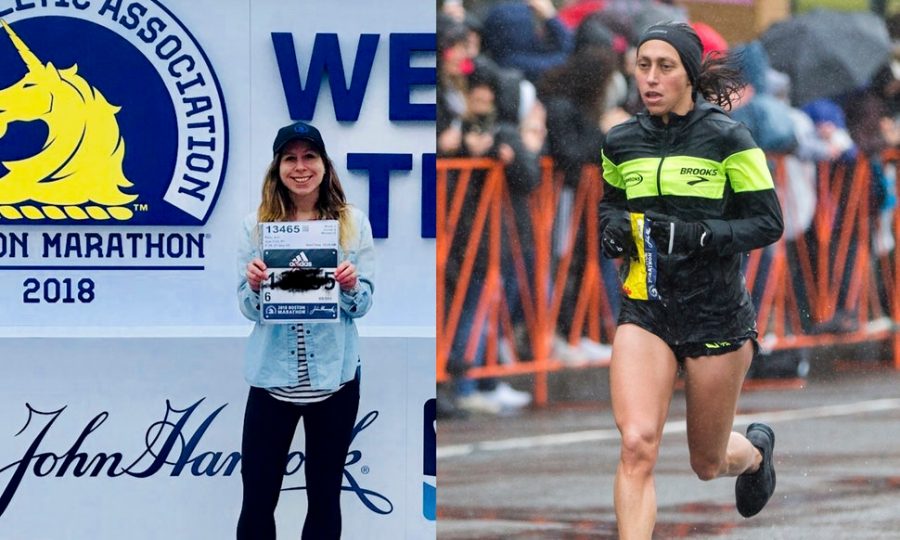
Desiree Linden Didn’t Just Win The Boston Marathon — She Reminded Me Of The REAL Reason I Run

About two weeks ago, I saw something on my Facebook newsfeed that stopped me mid-scroll: the weather report for the upcoming Monday showed a light monsoon with teeth-chattering temperatures. On any other Monday, this type of disheartening weather would be, well, just another Monday. But it just so happened that this Monday was also the day that roughly 30,000 runners were planning to make the 26.2-mile trek from HopkintonMassachusetts, to Boston, an event formally known as the Boston Marathon.

As a registered runner who’d been training for the race for almost five months, I began to feel my excitement for the race turn into unease. Maybe it won’t be so bad, I thought. Maybe it will be like one of those snowstorms they make a huge deal about, and it doesn’t even flurry!

It ended up being a historic race for many reasons. Not only were the wet, cold, and windy conditions some of the worst many of the runners had ever seen, but Olympian Desiree Linden became the first American woman in 33 years to win the marathon. But more on that, later.

This was my thirteenth marathon, so perhaps I should have had an inkling that something would happen to throw it out of whack. I left for the race wearing multiple layers, a hooded poncho, and plastic bags secured with rubber bands around my sneakers. “It looks like you’re heading off to a day at a chemical plant,” my friend Laura joked as I geared up to face the elements. When I got there, the Athlete’s Village (where runners congregate before entering their starting corals) was worse than anyone anticipated: mud everywhere, puddles 10 Porta Potties wide, runners in rain getups even more ridiculous than mine. We laughed at the absurdity of it all — what else could we do?

e6a537d5-5d7a-4997-812a-89b9a0d37648-img_4685-1.jpg

Nevertheless, I had trained hard for this race and was determined not to let bad weather stop me from reaching my race goal — a marathon PR, or a personal record. But even the most elite runners had eschewed their runderwear for full rain jackets, which is pretty much unheard of in the professional running world. Despite the universal setback, there was only one real solution: continue to move forward, towards Boston.

I’d love to tell you that despite the conditions, I crushed the race. That I didn’t let it phase me. That, gosh, I thrived in the harsh conditions, just like the men’s winner, “citizen runner” Yuki Kawauchiwho blew everyone away by besting the pros to become the first Japanese man to win the Boston Marathon since 1987. But alas, I did not (thrive, that is). I kept up with my goal pace until about mile 13, when I started feeling an extra tightness in my quads, and, was I just imagining it, or was the headwind more powerful now?

I had trained hard for this race and was determined not to let bad weather stop me from reaching my race goal

Read the full story on Bustle.