Post-Marathon Recovery Tips

Right after/the night after

  1. Don’t stop moving: Across the finish line, it’s important to keep moving. Sitting on the couch for the rest of the night will only create more stiffness. Make an effort to walk around and take breaks from sitting and resting to keep your blood circulating and reduce future muscle soreness. 
  2. Refuel and rehydrate: Refuel with water, nutrients, and electrolytes throughout the rest of the day (and the week after). Focus on replenishing carbs, protein, and electrolytes your body used for fuel during the race. Research shows perceptions of fatigue and soreness 72 hours post-marathon were reduced with protein intake immediately after a marathon.
  3. Avoid excessive alcohol: Yes, you want to celebrate with your friends, but alcohol is dehydrating and can slow recovery, so go easy. 
  4. Get a good night’s sleep: Muscle repair and recovery happens most when we sleep, so prioritize getting 7-8 hours.
HelpfulHurtful
-Electrolyte, carb and protein  consumption
– Compression socks or boots
– Epsom salt bath
– Hot bath
– Ice bath
– Legs up on the wall
– Mobility routine
– Sitting down and not moving for the rest of the day
– Aggressive stretching or foam rollingGoing for a run to “flush out the legs”
– Ignoring nutrition and/or rehydration
– Drinking sugary sports drinks and excessive alcoholIgnoring pain signals

<1-2 weeks after

  1. Protect your immune system: A marathon puts a lot of stress on your immune system, leaving you susceptible to infection or illness for up to 72 hours post-race (called the ‘open window’ theory). Staying hydrated, warm, and prioritizing recovery can help you avoid getting sick. 
  2. Wear supportive footwear: Your feet go through a lot on race day, so wearing supportive footwear in the days and weeks immediately after the race can help reduce additional impact.
  3. Continue practicing good nutrition and hydration.  
  4. Continue practicing good sleep hygiene. 
  5. Return to gentle foam rolling: Return to soft-tissue work as tolerated. 
  6. Engage in low-impact cross training activities: Think walking, cycling, and swimming. These types of movement can help improve blood circulation, reduce post-marathon stiffness, and re-introduce movement back to your body.
  7. Avoid returning to training too soon: Respect the effects of the race on your body. It can take your body over three weeks to fully recover from an all-out marathon, and up to two weeks to recover from a half marathon. Research shows that inflammation from a marathon can last up to two weeks, and biomarkers that indicate muscle damage and inflammation stay elevated for up to nine days post-marathon, so it’s important to give your body the rest it deserves. We advise taking AT LEAST 3-5 days completely off, and running at a reduced volume and intensity for at least two weeks. 
  8. Gradually return to strength training after 7-10 days with lower reps and lower volume. See #7.
  9. Listen to your body: Every one recovers differently. Just because you see your running buddies returning to running doesn’t mean you are ready to run, so take stock of how tired you feel, your resting and working heart rate, and other helpful information (number of hours of sleep, Garmin recovery scores, etc). 
  10. Seek help if needed from a physical therapist or another movement professional.
HelpfulHurtful
– Gentle foam rolling and mobility
– Low-impact cross training (walking, cycling, swimming, yoga)
-Listening to your body
– Returning to training too soon
– Ignoring pain signals
Talk to a physical therapist if…
– You’re limping (while walking, running, or both)
– You’re having trouble performing daily activities
– It hurts to put weight on one limb
– You’re still experiencing nagging pains 10+ days out from the marathon
– Your pain levels are >5-6 out of 10 on a 0-10 scale 10-14 days out from the marathon
– You completed your goal race (congrats!), are looking to train for your next race, but are looking for guidance and body maintenance along the way
– You’re interested in performance training to take your training to the next level

What’s the best pacing strategy for my upcoming marathon?

When it comes to running a marathon, there are three pacing strategy options: Positive pacing, negative pacing, or even pacing.

The most desired pacing strategy amongst most marathon runners is the negative split, or a negative pacing strategy. This means a runner will begin the race at a pace slightly slower than their average marathon pace, and get faster as the race goes on — ideally, finishing the second half of the race faster than the first. Scoring negative splits is a difficult feat because it means having enough gas in the tank in the second half of the race to run faster and stronger than you did in the first. With so many variables that can affect your race — from fueling, to weather conditions, to mental stamina — it’s not guaranteed that you’ll be able to kick things into a higher gear after 13-plus miles on your feet.

Even splits, or an even pacing strategy, means that runners stay pretty consistent throughout the entire race, aiming to run each mile at the same pace, or within 10 to 15 seconds of the previous mile. Like negative splits, this “metronome” pacing strategy can be incredibly difficult to pull off, and requires laser-like focus along with a high level of endurance.

Positive pacing, or positive splits, is often perceived as the less desirable of all the pacing strategies. Positive splits are the opposite of negative splits, meaning runners get slower throughout the race, with the second half of the race being slower than the first. This racing strategy is often attributed to a poor pacing strategy overall, with runners starting the race at a faster pace than they can sustain, and slowing down as the race goes on. Many runners “hit the wall” after mile 18 or 20, and struggle through the last 10k of the marathon, citing everything from gastrointestinal issues, muscle spasms and soreness, mental fatigue and exhaustion as the culprit that sabotaged their race.

Despite positive perceptions about negative-splitting a marathon, and negative perceptions towards positive splits, research shows that for most runners, the best marathon pacing strategy for a goal of a faster race time is to run even splits, or a slightly-positive split race. Recent world records have indicated more even splits are the best race strategy, while other race analyses have found marathoners more often adopt a positive pacing strategy. 

The latter might seem counterintuitive. After all, how can slowing down over the marathon distance lead to a personal record (PR) or personal best (PB)? 

Of course, with most things, there are a couple big caveats.

1. While slightly positive splits may lead to a faster finish time, that doesn’t mean going all-out in the first half of the race and completely falling apart in the second. A 2014 study of New York City Marathon finishers found that while a “positive pace profile” led to faster times in general, the variability in speed was low — meaning that while runners ran a technically slower back half of the marathon, their mile splits didn’t fluctuate a ton throughout the race.

2. Outsiders often associate “positive splits” with bonking, or an athlete’s body shutting down physically or mentally somewhere in the last half, or more often last 10k, of a race. Rather, the pacing strategy of elite marathoners is to start faster than their average pace, and then “recover” in the later stages of the race by running slightly slower than their average pace for two-thirds of the distance. So while they’re technically accumulating positive splits, this tactic isn’t happening because of an unplanned depletion of energy, but as a method of self and energy preservation. 

3. Every race course has a different elevation profile, and this will definitely affect runners’ pacing tactics, as well as their pacing strategies. Strategically difficult courses like the Boston Marathon and New York City Marathon are likely more easy targets for positively-paced races, while net downhill courses will make it easier to accomplish consistent negative splits. 

Whatever race you’re signed up for, no matter your pacing goals, these three takeaways will help you run a faster race:

  1. Train with your pacing strategy in mind — if your goal is to have evenly-paced splits or negative splits, your workouts and training need to reflect that.
  2. Stay consistent — the less variability you have in your pacing strategy, the better control you’ll have over your time goal.
  3. Prepare for both physical and mental hurdles: Runners are often derailed from their pacing strategies and time goals (AKA, they “hit the wall”) due to gastrointestinal distress, fueling issues, and mental barriers. Keep these outliers in mind throughout your training and develop a solid plan in place to ensure they won’t sabotage your race day pacing strategy. 

This Is How You Taper (According to Science)

For many runners, the taper can be the most frustrating portion of training for any race. Most runners are focused on high-mileage weeks and used to powering through tough workouts. The taper is just the opposite of that: lower mileage, more rest, and less vigorous workouts — all in hopes to give your body the break it needs before your biggest workout of all: the actual race. 

Whether you love or hate the taper, it’s important to understand the science behind this sometimes-controversial part of the training period. Below, you’ll find a summary of some of the most important research regarding the taper, and how to get the best results from your taper period.

1. A structured, 3-week taper may be the sweet spot when it comes to marathon performance for recreational runners

 A 2021 study published in Frontiers in Sport and Active Living analyzed the training activity of over 158,000 runners and found that longer, structured tapers — specifically, 3-week tapers — were associated with better performance compared to shorter tapers. Results indicated that runners who adopted the strict 3-week taper ran 2.6% faster — a median of 5 minutes and 32.4 seconds — when compared to runners who completed a shorter, less strict taper. Additionally, it’s interesting to note that female runners adopting a 3-week taper had greater finish time benefits compared to men.

2. A high-intensity interval session right before race day may improve performance in shorter races

While tapers are typically low-volume, incorporating a high-intensity interval workout that’s faster than race pace may improve your race time. A 2021 study published in Applied Physiology, Nutrition, and Metabolism found that a 60% reduction in running volume and final interval session at 110% intensity improved performance time by 5.2 seconds, compared to 3.2 seconds for runners who reduced running volume by just 30% and did their last interval session workout at race pace intensity. Researchers concluded that incorporating a high-intensity workout during a low-volume taper can help improve track performance. Of course, it’s important to note that these runners were racing a 1500-meter race, so more studies need to be conducted to determine if this strategy is applicable to longer races like marathons.

3. Reducing training volume by 41-60% after pre-taper overload training is optimal to maximize performance

Most athletes are familiar with overload training — progressively increasing the intensity and volume of workouts and mileage to avoid a fitness plateau. A 2023 meta-analysis published in PLoS One including 14 studies on endurance athletes and their responses to the taper period of training found that a taper period of 21 days or less that reduced training volume by 41-60% progressively but did NOT decrease intensity or frequency after a period of overload training maintained training benefits for up to 21 days, and increased performance.

Looking for more tips on how to taper effectively? Check out this article about what to do with your taper period.

What’s A Gait Analysis, And Should All Runners Get One?

This article was written for, and originally posted to Athletic Lab PT’s blog.

Running is seemingly a simple activity: Put one foot in front of the other.

Repeat. 

And again! 

But the truth is, there’s nothing simple about the act of running. If you think about it, you’re actually hopping from one leg to the other, carrying the load of three-times your body weight on one foot with every step. That’s no easy feat — even if some runners make the process look effortless!

For these reasons, your running form is incredibly important. It can make the difference between avoiding and/or preventing injuries, and recovering from chronic aches and pains. It can even help you inch closer to that shiny new PR!

So, how can you identify problems with your running form — and once you find them, how do you address them?

That’s where a gait analysis comes in. 

A gait analysis can identify biomechanical abnormalities in your running stride — in other words, any movements that could be compromising your ability to run in an injury-free and energy efficient way. It allows a physical therapist to take a measurable and quantifiable assessment of your run to optimize solutions for better movement and performance. It can also help recognize potential areas of weakness, providing simple facts about your running stride that can help you become a better runner in the future.

Curious if it’s right for you? Here are 6 things you can gain from a gait analysis:

1. Whether you’re a heel striker or forefoot striker

Whether you land on your heels, midfoot, or your forefoot is referred to as your footstrike, and there’s a longtime debate in the running community about which method is superior. Well, you can quit arguing: Neither method is “best.” But each style requires a different percentage of muscle strength. For example, a heel strike pattern puts a high demand on our quadriceps muscle — so if your quads are weak, but you consistently land on your heels, you might not be giving your body enough shock absorption to steer clear of future injuries.

Your physical therapist can help identify your foot strike pattern and then come up with a treatment plan to help strengthen the muscles necessary to sustain that pattern.

Knowing your foot strike pattern can also help your physical therapist recommend certain footwear and shoe styles that work better for your individual needs.

2. If you pronate, supinate, or have a neutral running style

Some runners tend to rely more heavily on the inside of their foot (pronators), while others land more naturally on the outside (supinators). During a gait analysis, your physical therapist can identify which category you fall into, then develop a therapeutic intervention (including exercises!) to strengthen your foot and avoid injury. 

Your PT can also recommend shoes that may complement your foot positioning and provide additional support. 

3. Your cadence

Running cadence, also called stride rate, refers to the number of steps per minute (SPM) you take as you run. Research shows that running cadence affects impact peak, kinematics, and kinetics of your run — all fancy terms which influence injury risk and recovery. Allowing a physical therapist to assess your cadence and find your optimal stride rate can both improve running economy, influence recovery, and prevent future injury. 

4. Any outstanding muscle imbalances

Watching you run allows your physical therapist to identify movement patterns that may clue one in to muscular imbalances that are present, like a greater pelvic drop on one side compared to the other. By observing movement patterns and then testing the appropriate muscle strength, your physical therapist can come up with a strengthening program to avoid overuse and prevent future injury.

5. Room for improvement

By simply watching you run for a few minutes, a physical therapist can perform a movement analysis and identify areas of improvement in your running stride. For example, did you know that a slight forward trunk lean can decrease the load on your knees without affecting the load on your ankles? 

If you’re experiencing pain or discomfort during a run, a gait analysis allows a physical therapist to identify potential causes of the problem. This makes it easy to help you implement solutions that can improve your chances of recovery.

6. A way to measure progress

Whether or not you’re experiencing pain or recovering from an injury, a gait analysis is a great way to determine where your running stride is currently at, so your PT can come up with a treatment plan that fits your needs. After several weeks and/or months of intervention, a future gait analysis can measure the progress you’ve made — allowing your PT to optimize your treatment plan to unlock movement efficiency potential.

***

So, where can you get a gait analysis, anyway? The physical therapists at Athletic Lab are happy to help. 

Opportunities at your local running store may also exist, but having a gait analysis performed by a physical therapist will ensure a professional is looking out for your best interest

How Long Should You Taper Before A Marathon? Here’s What the Research Says

After months of intense marathon training, it can feel counterintuitive to slow your roll in the last few weeks before your race. But that’s exactly what a taper is: An opportunity to tone down your training, reduce your mileage and intensity, and let your body really absorb the months of hard work you’ve put in — while simultaneously resting in order to regroup your full strength and energy by race day.

For some runners, the taper is a dream. A chance to rest after a physically and mentally demanding couple of months?! Bring it on! 

However, a lot of the runners I coach absolutely HATE the taper. Even though it’s designed with optimal race performance in mind, it disrupts the routine they’ve so diligently followed for the past several months, and can even make them feel lazy. Many of my runners report feeling sluggish rather than rested. And for some of my female athletes especially, this less intense volume of mileage worries them that if they don’t pay close attention to their nutrition, they’ll have a few extra pounds to cart around with them on race day.

This leads to a lot of athletes “kind of” (but not really) tapering, or asking me to keep their taper short and sweet (just two weeks).

Despite the apprehension about the taper, research shows that a longer, more disciplined taper may improve marathon performance.

A study published in Frontiers in Sport and Active Living analyzed the training activities of more than 158,000 recreational marathon runners to define tapers based on a decrease in training volume (or weekly mileage). 

Researchers found that strict tapers were associated with better mathon performance compared to relaxed tapers, and that longer tapers (up to three weeks) were associated with better performance when compared to shorter tapers. In fact, a strict three-week taper was associated with a median finish-time saving of 5 minutes and 30s, or 2.6%, when compared to a shorter taper.

These study results are similar to previous research on the subject, and suggest that recreational runners can improve their marathon performance by adopting a longer, more regimented taper.


The bottom line? The dreaded taper might just be your ticket to a new PR. Embrace it!


Smyth B, Lawlor A. Longer Disciplined Tapers Improve Marathon Performance for Recreational Runners. Front Sports Act Living. 2021;3:735220. Published 2021 Sep 28. doi:10.3389/fspor.2021.735220

20 Boston Marathon Finishers Share The One Thing They Wish They Knew Before The Race

I remember my first Boston Marathon. I trekked out to Coolidge Corner with some of my friends, armed with sunscreen and Nalgene bottles filled with vodka. What I witnessed was terrifying: There were faces pitted with pure exhaustion, individuals limping along the course defeatedly, and way more bloody nipples than I ever thought I’d see in one day. At one point, a group of drunk college kids tried to cross over the route and knocked over some helpless runners along the way. Later, a runner pulled over in front of our group and tried to take a gulp from my friend Eric’s boozy hydration pack as he embarrassedly stammered, “Sir, it’s alcohol.”

Pure shock and limited knowledge about endurance races aside, I felt so inspired by all of the runners making the journey from Hopkinton to Boston that after I returned to campus, I ran on a treadmill in an empty Northeastern Marino Center, watching (mostly inebriated) college kids return from their cheering posts along the course in droves outside the window.

Several years, one graduation, and two of my own marathons later, I would get my own chance to make the epic right onto Hereford Street and left on Boylston that so many runners dream of. Though I’d watched the showdown happen live for five consecutive years and knew certain things — like if I took a drink from a college kid on the course, there was an 80 percent chance it would be beer — there was still a lot I didn’t know about how the race is organized, and what exactly this complicated course entails.

To help those running the course for the first time this year, I asked finishers of varying years past: What’s the one thing you wish you knew before running the Boston Marathon?

Before the Race: What You Need To Know

11150462_10155480391615352_1493165761750384174_n

Write Your Name On Your T-Shirt
“I’ll never forget how badly I was feeling during the 2016 marathon when I heard a random guy yell my name, and then meet my gaze to tell me that I was looking great. The realization that he had picked me out from the crowd of runners propelled me forward. Hearing any spectator shout your name because you have it on your shirt — or maybe even written vertically in Sharpie on your biceps — will at the very least make you smile, and at most give you a much-needed energy boost!” —Michele Gorman

The Expo Will Be Crowded
“The day before the marathon is the worst day to go to the expo. Everyone assumes it’s like other races where you can get in no problem. The line to get into the expo snakes around the building and then snakes all around the inside as well. Go on Friday!” —Brad Castillo Continue reading “20 Boston Marathon Finishers Share The One Thing They Wish They Knew Before The Race”

Here’s Why You Might Feel Sad After Finishing a Marathon

[originally published in March 2017]

One evening in late October, I was catching up with a friend when I suddenly found myself breaking down.

“I’m going through a hard time,” I told her, choking back tears. “I had the worst summer of my life.”

The first statement was true, evidenced by my zombie-like daytime interactions and random, tear-filled outbursts on the subway (sorry, New Yorkers on the A train). But I’ll admit that the second was pure melodrama, sputtered only in retaliation to how the event I had most been looking forward to all summer had played out: my first Ironman.

Starting in May and continuing through September, I dedicated weekday mornings and full weekends to swimming, biking, and running to prepare for the 140.2-mile course of Ironman Maryland on October 1. I’ve run 10 marathons before, but I approached my training to this particular race with a new level of determination. I hired a triathlon coach, found a core group of training partners, and even upgraded my steel-framed bike to a triathlon-specific, carbon-fiber model from Specialized bikes.

I was dedicated. And come October, I was ready to crush the distance.

Unfortunately, the Ironman gods had other plans. On the morning of the race, the swim start was first delayed, then abruptly cancelled due to unsafe water conditions. We were left with only the bike and run portions of the course. While not insignificant feats, it was not the race course we had expected.

Crossing the finish line of my first Ironman-sanctioned race should have spurred feelings of elation, victory, and pride for pushing through a difficult challenge despite unfortunate circumstances (not to mention terrible weather conditions). But I didn’t feel any of those things. Instead, all I could feel was an overwhelming, crushing sensation of sadness and the scary prospect of the unknown.

Now what? Continue reading “Here’s Why You Might Feel Sad After Finishing a Marathon”

Inspiring Words From MEB Before The Marathon

The New York City Marathon is this Sunday, which means New York City is buzzing with excitement (and I’m sure, a LOT of pre-race jitters). What’s even better is that a lot of elite runners are in town to celebrate the days leading up to the big race, including Meb Keflezighi, who will be running his 26th (and final) marathon this Sunday. I’ve had the honor of meeting with the American athlete, Olympian and 2014 Boston Marathon winner in the past, but took special pride in listening to what he had to say in front of a packed room at Custom Performance Physical Therapy Wednesday evening, and at his retirement party at Jack Studios in partnership with Epson on Thursday night.

On Wednesday, Meb had a Q&A-style interview with Gary Muhrcke, the winner of New York City’s first marathon in 1970 (he ran a 2:31:39), Keflezighi. At Epson, a similar format with a different host ensued. He answered questions about his own training as well as dished out advice to fellow runners in attendance. As always, I was awed by Meb’s fun-loving attitude and humble demeanor — especially right before such a big race!

Here are the biggest takeaways from the event.

The Swag IS Worth It

Perhaps my favorite story that Meb told us was that he came to learn he had a self-described God-given talent because he was bribed with a t-shirt. His seventh grade physical education teacher promised anyone in the class who ran a 6:15-minute or less mile would get a free t-shirt, and an A in the class. I smiled at this story, and think that a LOT of runners can relate. We all do some pretty questionable things for swag.

Preparation Is The Key To Success

It’s not what you do in two hours of practice, but what you do to care for yourself in the next 22 hours,” Meb explained, emphasizing the importance of recovery. “Do things diligently, day in and day out.”

Meb Didn’t Begin Running Marathons Until He Was 27

As a recent 28-year-old, this gives me hope that my running journey is just beginning.

Encourage More People To Join The Sport

Meb encouraged everyone in attendance to invite others to join the sport of running.  “We always remember who brought us to the sport,” he explained. “Encourage others to join you.

Take Comfort In The Crowd

Meb draws inspiration from other runners as he races. “My mantra? I know I’m hurting. That person next to me must be hurting as well. I want it it to hurt more.”

The Ideal Pre-Race Dinner? Spaghetti & Meatballs

At least, that’s what Meb’s mom used to make him before big races when he was growing up.

It’s OK (and Normal) To Fail Before You Succeed

“So many people I know or have read about failed many times on the road to becoming the best they could be. It’s not how many times you fall, it’s how many times you get back up.”

POST-RACE UPDATE

Meb finished 11th at Sunday’s Race in 2 hours, 15 minutes, 29 seconds. He may not have made his goal to be in the top 10, but he certainly gave New Yorkers an inspiring victory lap.


Here’s Everything You Need To Pack For Marathon Village This Sunday

The New York City Marathon is a unique race from start to finish, and one of the things that truly sets it apart from other races is the marathon village where runners congregate before heading to their respective corrals. I’ve run New York City twice in the past, so have spent at least six hours in the marathon village on Staten Island — maybe even longer! The first year, I was pretty shocked at the vast differences between this pre-race situation and others. The security is heightened, which means it takes a little bit longer to get there, and you’re stuck waiting in a (very large) contained area for an extended time period. So it pays to be prepared!

Below, please find a list of suggested items to pack for marathon village. Note that these items are separate from your actual race-day outfit (including SPI-belt and any running accessories!) and fuel for the race.

    1. Throwaway layers. Even if you think you won’t need them, bring them. You can get cheap sweatshirts and/or sweatpants at a local Thrift Store, or take the opportunity to clean out your closet and find warm clothes you don’t wear anymore.
    2. A blanket. Even if you don’t think you’ll be cold, you’ll be waiting for awhile. You may want a blanket to snuggle under, or even sit on.
    3. Toilet paper/wet wipes. While the Port-A-Potty situation is typically plentiful, you never know what might happen once you’re inside. Be prepared.
    4. Plastic ziplock bags for your phone in case it’s wet.
    5. Extra food & water. You’ll be waiting a long enough that you’ll probably need to eat. Bring food, snacks, and water/gatorade.
    6. Clear garbage bags. These can be used for warmth (yes, you can wear a garbage bag!) or as something to sit on. The ground will most likely be wet upon arrival.
    7. Extra socks. These can double as hand warmers pre-race.
    8. Extra sunscreen. It may be November, but you’ll likely be outside during the sun’s strongest hour. Grease up!
    9. Bodyglide. If you love it, lube  it.
    10. Handwarmers. It probably won’t be that cold, but if you tend to get chilly easily, might as well bring a pair.
    11. OPTIONAL: A cheap, portable phone charger. Marathon village gets terrible service and will eat your battery alive. If you plan on having your phone with you post-race for pictures, getting in touch with friends, etc., a cheap portable phone charger can at least ensure you’ll start the race with a decently full battery. You can choose to hand off your charger to a friend or family member spectating the race, or leave it in marathon village to be donated. **Either way, I highly recommend keeping your phone on AIRPLANE MODE in marathon village to avoid burning out your battery**

10406859_10154812426745352_8893709993161483386_n

Other things to remember:

  1. Lay your race day outfit out the night before and share it with your friends and family members so they know what you’ll be wearing. This also helps you have a smooth and coordinated marathon morning.
  2. If you’re planning to meet up with friends inside marathon village, try to meet them at the ferry or bus beforehand.
  3. Trim your toenails the night before the race.
  4. Write your name on your bib or shirt — it will be so helpful to have strangers calling out your name!
  5. Charge your phone, GPS watch, and iPod (if you use one) the night before the race.
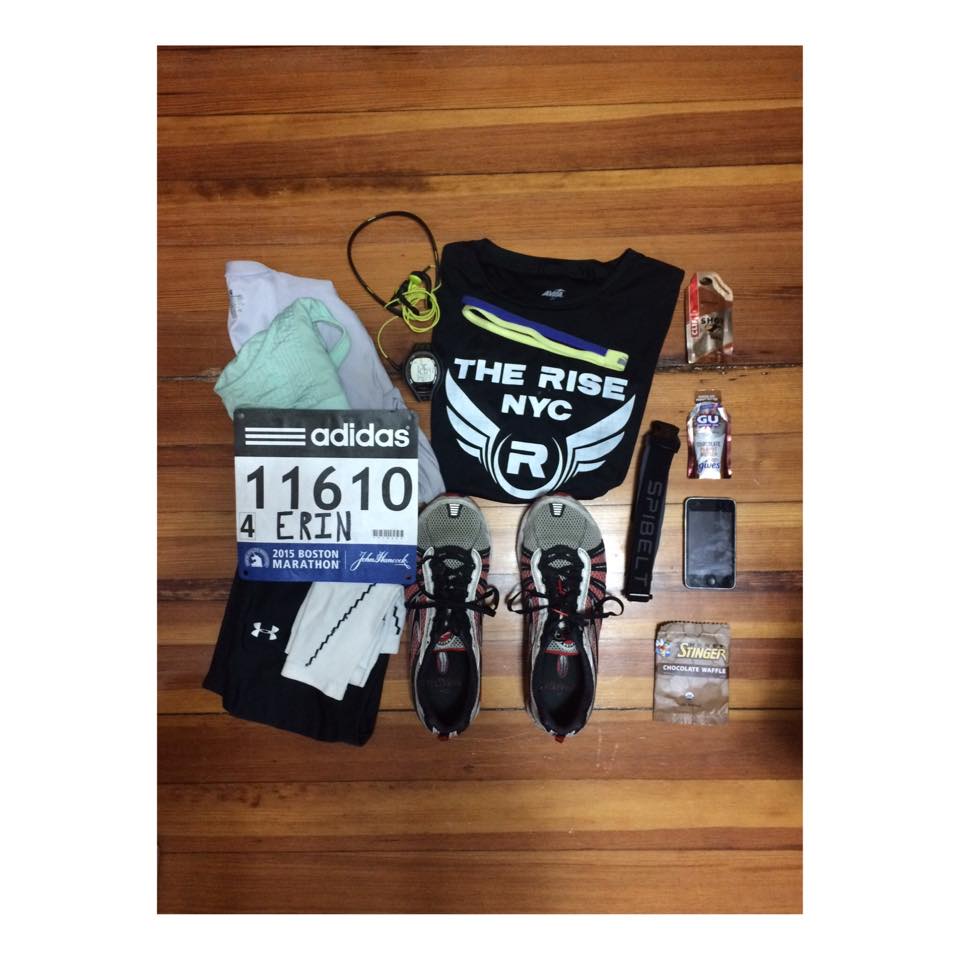
  6. Pick a post-race meeting spot for friends and family spectating before Sunday. If you aren’t checking a bag, ask that someone hold a spare change of clothes and a body wipe for you.

Do you have anything to add? What are your “must-have” items in marathon village?

30 Healthy Ways To Distract Yourself During Your Taper

As I stated before, the taper period before a big race can be a difficult time period. Not only are you feeling antsy about running the distance ahead of you, but now you have all of this newfound extra time to think about it (and obviously overthink and overanalyze your training plan and everything you’ve done over the past couple of months). 

To help you survive your final weeks before the New York City Marathon, here are a few healthy ways to distract yourself during your taper. Continue reading “30 Healthy Ways To Distract Yourself During Your Taper”