What’s A Gait Analysis, And Should All Runners Get One?

This article was written for, and originally posted to Athletic Lab PT’s blog.

Running is seemingly a simple activity: Put one foot in front of the other.

Repeat. 

And again! 

But the truth is, there’s nothing simple about the act of running. If you think about it, you’re actually hopping from one leg to the other, carrying the load of three-times your body weight on one foot with every step. That’s no easy feat — even if some runners make the process look effortless!

For these reasons, your running form is incredibly important. It can make the difference between avoiding and/or preventing injuries, and recovering from chronic aches and pains. It can even help you inch closer to that shiny new PR!

So, how can you identify problems with your running form — and once you find them, how do you address them?

That’s where a gait analysis comes in. 

A gait analysis can identify biomechanical abnormalities in your running stride — in other words, any movements that could be compromising your ability to run in an injury-free and energy efficient way. It allows a physical therapist to take a measurable and quantifiable assessment of your run to optimize solutions for better movement and performance. It can also help recognize potential areas of weakness, providing simple facts about your running stride that can help you become a better runner in the future.

Curious if it’s right for you? Here are 6 things you can gain from a gait analysis:

1. Whether you’re a heel striker or forefoot striker

Whether you land on your heels, midfoot, or your forefoot is referred to as your footstrike, and there’s a longtime debate in the running community about which method is superior. Well, you can quit arguing: Neither method is “best.” But each style requires a different percentage of muscle strength. For example, a heel strike pattern puts a high demand on our quadriceps muscle — so if your quads are weak, but you consistently land on your heels, you might not be giving your body enough shock absorption to steer clear of future injuries.

Your physical therapist can help identify your foot strike pattern and then come up with a treatment plan to help strengthen the muscles necessary to sustain that pattern.

Knowing your foot strike pattern can also help your physical therapist recommend certain footwear and shoe styles that work better for your individual needs.

2. If you pronate, supinate, or have a neutral running style

Some runners tend to rely more heavily on the inside of their foot (pronators), while others land more naturally on the outside (supinators). During a gait analysis, your physical therapist can identify which category you fall into, then develop a therapeutic intervention (including exercises!) to strengthen your foot and avoid injury. 

Your PT can also recommend shoes that may complement your foot positioning and provide additional support. 

3. Your cadence

Running cadence, also called stride rate, refers to the number of steps per minute (SPM) you take as you run. Research shows that running cadence affects impact peak, kinematics, and kinetics of your run — all fancy terms which influence injury risk and recovery. Allowing a physical therapist to assess your cadence and find your optimal stride rate can both improve running economy, influence recovery, and prevent future injury. 

4. Any outstanding muscle imbalances

Watching you run allows your physical therapist to identify movement patterns that may clue one in to muscular imbalances that are present, like a greater pelvic drop on one side compared to the other. By observing movement patterns and then testing the appropriate muscle strength, your physical therapist can come up with a strengthening program to avoid overuse and prevent future injury.

5. Room for improvement

By simply watching you run for a few minutes, a physical therapist can perform a movement analysis and identify areas of improvement in your running stride. For example, did you know that a slight forward trunk lean can decrease the load on your knees without affecting the load on your ankles? 

If you’re experiencing pain or discomfort during a run, a gait analysis allows a physical therapist to identify potential causes of the problem. This makes it easy to help you implement solutions that can improve your chances of recovery.

6. A way to measure progress

Whether or not you’re experiencing pain or recovering from an injury, a gait analysis is a great way to determine where your running stride is currently at, so your PT can come up with a treatment plan that fits your needs. After several weeks and/or months of intervention, a future gait analysis can measure the progress you’ve made — allowing your PT to optimize your treatment plan to unlock movement efficiency potential.

***

So, where can you get a gait analysis, anyway? The physical therapists at Athletic Lab are happy to help. 

Opportunities at your local running store may also exist, but having a gait analysis performed by a physical therapist will ensure a professional is looking out for your best interest

Does weather really dictate running performance?

It’s marathon season! Which means everyone with a race on the calendar is fixated on one thing, and one thing only: The weather.

That’s right. Out of all the things you can and can’t control on race day, obsessively checking and rechecking the weather seems to be a runner’s favorite past-time. As a running coach, I’ve heard all sorts of theories on “the best weather for running,” ranging from cold-weather enthusiasts to those who thrive off sunny skies. But it made me wonder: what’s actually the best weather for running a marathon?

A 2020 study published in Medicine & Science in Sports and Exercise analyzed meteorological data for 1258 races — from the marathon, to the 50k, to the 5k and the 3000m steeplechase — held between 1936 and 2019 across 42 countries, enabling analysis of 7867 athletes. Through machine learning, it concludes that a Wet-Bulb Globe Temperature of between 10 and 17.5 degrees Celicus — or 50-63.5 degrees Fahrenheit — increased the likelihood for peak performance. For every degree outside these optimum conditions, performance declined by 0.3-0.4 percent.

A different study published more recently in Frontiers of Physiology analyzed data from the Berlin Marathon results over the last 45 years, and found that temperatures greater than 15 degrees Celsius (59 degrees Fahrenheit) and higher precipitation levels impaired performance of master marathoners.


So, what’s the moral of the story? While you can’t guarantee a perfect weather day, if your heart is set on a PR, you can schedule your next race strategically. Pick a marathon in a specific location and at a specific time of year to increase your chances of waking up to good weather. While you’ll probably still obsess over your weather app in the weeks before the big day, at least now you can do so with a little more science on your side.

Here’s Why You Might Feel Sad After Finishing a Marathon

[originally published in March 2017]

One evening in late October, I was catching up with a friend when I suddenly found myself breaking down.

“I’m going through a hard time,” I told her, choking back tears. “I had the worst summer of my life.”

The first statement was true, evidenced by my zombie-like daytime interactions and random, tear-filled outbursts on the subway (sorry, New Yorkers on the A train). But I’ll admit that the second was pure melodrama, sputtered only in retaliation to how the event I had most been looking forward to all summer had played out: my first Ironman.

Starting in May and continuing through September, I dedicated weekday mornings and full weekends to swimming, biking, and running to prepare for the 140.2-mile course of Ironman Maryland on October 1. I’ve run 10 marathons before, but I approached my training to this particular race with a new level of determination. I hired a triathlon coach, found a core group of training partners, and even upgraded my steel-framed bike to a triathlon-specific, carbon-fiber model from Specialized bikes.

I was dedicated. And come October, I was ready to crush the distance.

Unfortunately, the Ironman gods had other plans. On the morning of the race, the swim start was first delayed, then abruptly cancelled due to unsafe water conditions. We were left with only the bike and run portions of the course. While not insignificant feats, it was not the race course we had expected.

Crossing the finish line of my first Ironman-sanctioned race should have spurred feelings of elation, victory, and pride for pushing through a difficult challenge despite unfortunate circumstances (not to mention terrible weather conditions). But I didn’t feel any of those things. Instead, all I could feel was an overwhelming, crushing sensation of sadness and the scary prospect of the unknown.

Now what? Continue reading “Here’s Why You Might Feel Sad After Finishing a Marathon”

Inspiring Words From MEB Before The Marathon

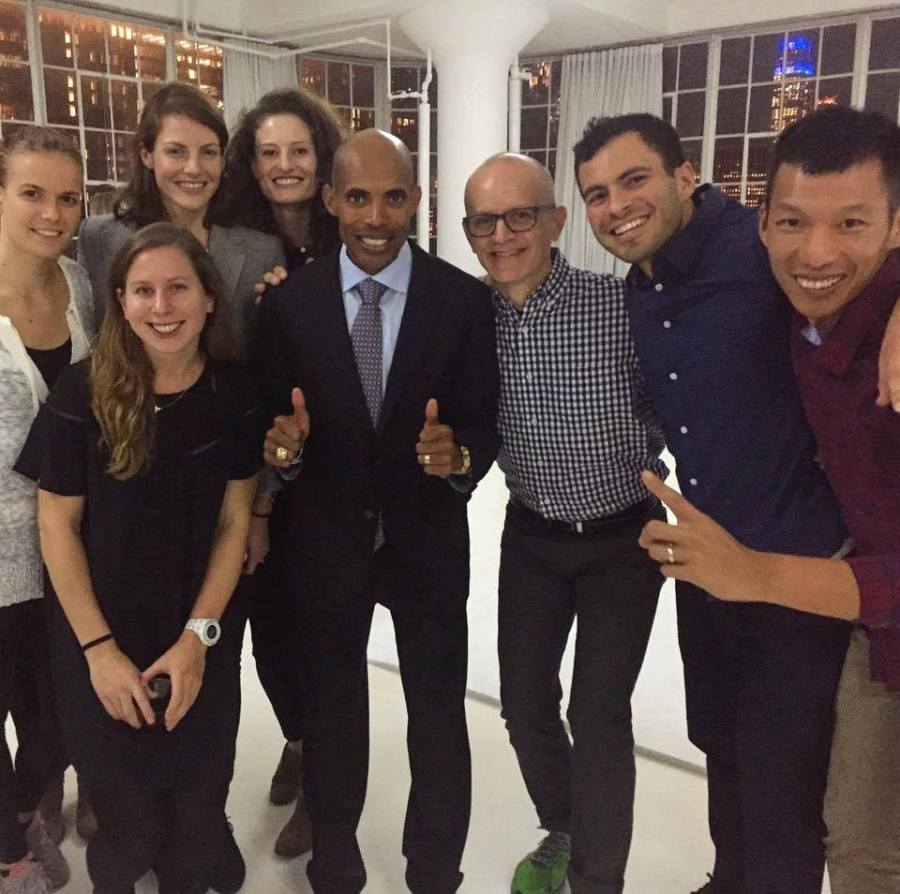
The New York City Marathon is this Sunday, which means New York City is buzzing with excitement (and I’m sure, a LOT of pre-race jitters). What’s even better is that a lot of elite runners are in town to celebrate the days leading up to the big race, including Meb Keflezighi, who will be running his 26th (and final) marathon this Sunday. I’ve had the honor of meeting with the American athlete, Olympian and 2014 Boston Marathon winner in the past, but took special pride in listening to what he had to say in front of a packed room at Custom Performance Physical Therapy Wednesday evening, and at his retirement party at Jack Studios in partnership with Epson on Thursday night.

On Wednesday, Meb had a Q&A-style interview with Gary Muhrcke, the winner of New York City’s first marathon in 1970 (he ran a 2:31:39), Keflezighi. At Epson, a similar format with a different host ensued. He answered questions about his own training as well as dished out advice to fellow runners in attendance. As always, I was awed by Meb’s fun-loving attitude and humble demeanor — especially right before such a big race!

Here are the biggest takeaways from the event.

The Swag IS Worth It

Perhaps my favorite story that Meb told us was that he came to learn he had a self-described God-given talent because he was bribed with a t-shirt. His seventh grade physical education teacher promised anyone in the class who ran a 6:15-minute or less mile would get a free t-shirt, and an A in the class. I smiled at this story, and think that a LOT of runners can relate. We all do some pretty questionable things for swag.

Preparation Is The Key To Success

It’s not what you do in two hours of practice, but what you do to care for yourself in the next 22 hours,” Meb explained, emphasizing the importance of recovery. “Do things diligently, day in and day out.”

Meb Didn’t Begin Running Marathons Until He Was 27

As a recent 28-year-old, this gives me hope that my running journey is just beginning.

Encourage More People To Join The Sport

Meb encouraged everyone in attendance to invite others to join the sport of running.  “We always remember who brought us to the sport,” he explained. “Encourage others to join you.

Take Comfort In The Crowd

Meb draws inspiration from other runners as he races. “My mantra? I know I’m hurting. That person next to me must be hurting as well. I want it it to hurt more.”

The Ideal Pre-Race Dinner? Spaghetti & Meatballs

At least, that’s what Meb’s mom used to make him before big races when he was growing up.

It’s OK (and Normal) To Fail Before You Succeed

“So many people I know or have read about failed many times on the road to becoming the best they could be. It’s not how many times you fall, it’s how many times you get back up.”

POST-RACE UPDATE

Meb finished 11th at Sunday’s Race in 2 hours, 15 minutes, 29 seconds. He may not have made his goal to be in the top 10, but he certainly gave New Yorkers an inspiring victory lap.


The Best and Worst Things to Say to a Runner During a Race

“Go, random stranger!”

“If Donald Trump can run, so can you!”

“Worst parade ever.”

If you’ve run a race recently, you might recognize these phrases from the signs held by spectators along the course. Crowd support is an incredible phenomenon, and as a longtime runner, I’m forever grateful to anyone who comes out and stands on the side of the road, rain or shine, for hours, just to watch me run by for 10 seconds.

But as much as I appreciate giving a swift high five to a, “Touch here for power” sign (it really does make me feel like I’ve just had a gulp of Space Jam’s secret stuff!), I get equally as frustrated with some spectators and their not-so-helpful cheers. For example, the guy who yelled, “You’re almost there!” to me at mile 11 of the 26.2-mile Boston Marathon this year made me want to fling myself off the side of the road.

I was fuming: Was this guy seriously watching this race without any idea how long a marathon is?! Did he not understand how far I still had to run?! My mood shifted from concentrating on the course before me (did you know marathons hurt?) to being furious with a stranger. It was depleting, and in a way, demeaning—though I know that wasn’t his intention.

The fact of the matter is: Sometimes fans think they’re being helpful, but their “motivating” cheers or race signs are actually mentally draining and deflating for runners. To help fans be the best support crew they can be, I polled my friends in The Most Informal Running Club Ever, NYC to see what they most enjoy hearing or seeing during a race.

Here are the best (and worst) things to say or do on the sidelines.

Ways to Be Helpful

Screen Shot 2017-11-01 at 1.35.38 PM

“I laugh at signs that say, ‘Don’t trust a fart.’” — Christopher Ho, marathoner

“During the Boston Marathon, I laughed out loud, pointed, and gave a thumbs up to the guy holding a sign that said, ‘If Jeb! can make it through 2015, then you can make it through this race.’” — Michele Richinick, two-time marathoner

“I love signs that say, ‘You’re faster than [fill in mass transit of choice]—like, ‘You’re faster than the G train’ (New York), or ‘the metro’ (Washington, DC), or ‘the T’ (Boston).” — Jasmin Roman, marathoner

Continue reading “The Best and Worst Things to Say to a Runner During a Race”

Here’s Everything You Need To Pack For Marathon Village This Sunday

The New York City Marathon is a unique race from start to finish, and one of the things that truly sets it apart from other races is the marathon village where runners congregate before heading to their respective corrals. I’ve run New York City twice in the past, so have spent at least six hours in the marathon village on Staten Island — maybe even longer! The first year, I was pretty shocked at the vast differences between this pre-race situation and others. The security is heightened, which means it takes a little bit longer to get there, and you’re stuck waiting in a (very large) contained area for an extended time period. So it pays to be prepared!

Below, please find a list of suggested items to pack for marathon village. Note that these items are separate from your actual race-day outfit (including SPI-belt and any running accessories!) and fuel for the race.

    1. Throwaway layers. Even if you think you won’t need them, bring them. You can get cheap sweatshirts and/or sweatpants at a local Thrift Store, or take the opportunity to clean out your closet and find warm clothes you don’t wear anymore.
    2. A blanket. Even if you don’t think you’ll be cold, you’ll be waiting for awhile. You may want a blanket to snuggle under, or even sit on.
    3. Toilet paper/wet wipes. While the Port-A-Potty situation is typically plentiful, you never know what might happen once you’re inside. Be prepared.
    4. Plastic ziplock bags for your phone in case it’s wet.
    5. Extra food & water. You’ll be waiting a long enough that you’ll probably need to eat. Bring food, snacks, and water/gatorade.
    6. Clear garbage bags. These can be used for warmth (yes, you can wear a garbage bag!) or as something to sit on. The ground will most likely be wet upon arrival.
    7. Extra socks. These can double as hand warmers pre-race.
    8. Extra sunscreen. It may be November, but you’ll likely be outside during the sun’s strongest hour. Grease up!
    9. Bodyglide. If you love it, lube  it.
    10. Handwarmers. It probably won’t be that cold, but if you tend to get chilly easily, might as well bring a pair.
    11. OPTIONAL: A cheap, portable phone charger. Marathon village gets terrible service and will eat your battery alive. If you plan on having your phone with you post-race for pictures, getting in touch with friends, etc., a cheap portable phone charger can at least ensure you’ll start the race with a decently full battery. You can choose to hand off your charger to a friend or family member spectating the race, or leave it in marathon village to be donated. **Either way, I highly recommend keeping your phone on AIRPLANE MODE in marathon village to avoid burning out your battery**

10406859_10154812426745352_8893709993161483386_n

Other things to remember:

  1. Lay your race day outfit out the night before and share it with your friends and family members so they know what you’ll be wearing. This also helps you have a smooth and coordinated marathon morning.
  2. If you’re planning to meet up with friends inside marathon village, try to meet them at the ferry or bus beforehand.
  3. Trim your toenails the night before the race.
  4. Write your name on your bib or shirt — it will be so helpful to have strangers calling out your name!
  5. Charge your phone, GPS watch, and iPod (if you use one) the night before the race.
  6. Pick a post-race meeting spot for friends and family spectating before Sunday. If you aren’t checking a bag, ask that someone hold a spare change of clothes and a body wipe for you.

Do you have anything to add? What are your “must-have” items in marathon village?

30 Healthy Ways To Distract Yourself During Your Taper

As I stated before, the taper period before a big race can be a difficult time period. Not only are you feeling antsy about running the distance ahead of you, but now you have all of this newfound extra time to think about it (and obviously overthink and overanalyze your training plan and everything you’ve done over the past couple of months). 

To help you survive your final weeks before the New York City Marathon, here are a few healthy ways to distract yourself during your taper. Continue reading “30 Healthy Ways To Distract Yourself During Your Taper”

How To Survive Your Taper Period Before 2017 The New York City Marathon

In theory, the taper before your big race should be a rewarding time. But more often than not, I’ve found it to be a challenging couple of weeks. After all, running isn’t just a means to an end for me — it’s how I cope with stress, help myself feel healthy, and it’s even how I socialize a lot of the time! So when taper time rolls around and I’m being told to ‘cool it’ with running, I get a little ansty. And anxious. And in the past, I’ve panicked.

It doesn’t matter that I’ve run 12 marathons and countless other races and triathlons in my life — the taper period is always a struggle for me! The good news is, there are a lot of things you can do not only make your taper period easier, but also to help make your actual race a success.

Since it’s taper time for those running the 2017 New York City Marathon, I decided to share some insight into how to survive (and win!) your taper period.

Screen Shot 2017-10-20 at 4.21.49 PM


The Golden Rules of Tapering

Continue reading “How To Survive Your Taper Period Before 2017 The New York City Marathon”

The Runner Diaries — Sabrina Wieser

Inspired by Refinery29’s Money Diaries and The Cut’s Sex Diaries, welcome to The Runner Diaries, where we’re sharing a behind-the-scenes look into a week of training with runners of varying ages, paces and GPS coordinates. Get The Runner Diaries delivered to your inbox, here.

This week, we have Sabrina Wieser of New York City. The 31-year-old run coach and competitive runner balances a rigorous schedule of healthy eating, a digital marketing job, managing her own coaching clients, and training for the New York City Marathon — her first attempt at the 26.2-mile footrace!

Name: Runningbrina (Sabrina Wieser)
Location: New York City
Age: 31
Goal race? The New York City Marathon (it’s my first)
Following a training plan? As I running coach I have created my own based on tips and advices from local running coaches who ran the race before.
How long you’ve been ‘a runner: I started running 4 years ago
Goal weekly mileage: Increasing the mileage right now. I’m at 40 miles per week

CentralPark_Sabrina-19

Runner’s Statement:

I started running right before I got married to lose weight. I wasn’t athletic growing up, so physical activity was totally new to me. I fell in love with running and today I can’t picture myself without it anymore. I love running in New York City, breathing in the good vibes in Central Park surrounded by so many inspiring athletes. I do both bodybuilding and running which makes it even harder for me sometimes. Waking up at 4:30am to run and going to the gym at night is what makes me feel alive. We all need things in our lives that we enjoy and make us feel good — working out is exactly that for me. Continue reading “The Runner Diaries — Sabrina Wieser”

Do You Need A Coach For the 2017 New York City Marathon? A Coach Weighs In

If you are signed up for the 2017 New York City Marathon, you probably know that you need to start training fairly soon, if you haven’t already started. If you don’t, well, here’s your heads up: it’s time to start running!

The marathon is an entirely different beast of a race than a local 5k or 10k — or even a half marathon. So when it comes to tackling the 26.2-mile distance, it’s not uncommon to question whether or not you need to hire a running coach to get yourself to the finish line.

I’ll be the first person to tell you that you probably don’t.

That’s right — Road Runners Club of America Certification and all, I’ll tell you right now that you don’t need a coach to get yourself to the end of a marathon course. In fact, if you’re in decent enough shape, you could probably walk or jog the course to completion right now.

However, having said that, if you did attempt to conquer the course right now, it would most likely be a horrible experience. It wouldn’t be enjoyable, and you’d probably suffer through it — maybe even injuring yourself along the way.

That’s why I’ll be the first person to tell you that you don’t need a coach to get yourself through a marathon … but it’s a pretty good idea.

Having a running coach or mentor to guide you through 18, or 16, or 12 weeks of marathon training is helpful for a number of reasons, whether you’re a novice runner or a seasoned athlete. While I didn’t hire a coach for my first marathon, I sought out the guidance of coach Chris Baker for my first ironman and am confident that my experience was infinitely better because of it.

How, exactly, can a run coach help get you to the finish line? Let me count the ways.

Screen Shot 2017-07-12 at 9.07.56 AM Continue reading “Do You Need A Coach For the 2017 New York City Marathon? A Coach Weighs In”