Pushing for a PR Sabotaged Me. Here’s How Embracing Failure Led to Better Results

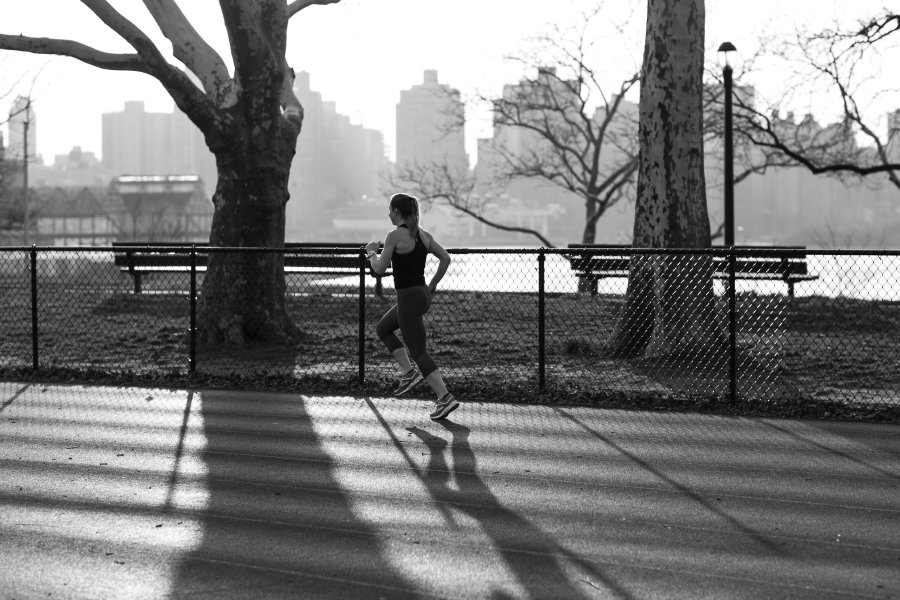
My friend Erin and I have a set of rituals for our weekly early morning runs.

It involves multiple 5 a.m. alarms, a quick accountability text, a subway commute that always seems to get delayed, and sometimes, a twinge of regret (why do we torture ourselves so early?!).

Once we’re finally ready to run, the excuses begin: “Don’t hate me if I’m slow,” I’ll plead. “I was up until midnight finishing an assignment.”

Erin almost always rolls her eyes, citing a different reason for why she’s not feeling 100 percent. And usually, I breathe a sigh of relief. Whew. No pressure if I’m dragging ass today.

But lately, I’ve been second-guessing this lackadaisical approach to our training. We’re both naturally competitive, career-driven, accomplished women. We work full-time, take on side gigs, have thriving social lives, and in our spare time, we run marathons (and qualify for Boston). What about that says, “Let’s take it easy today, shall we?” And yet, this excuse-riddled scenario continues to repeat itself.

After some reflection, I realized that this hedging behavior doesn’t just apply to running—it also overflows to my career and personal relationships. I routinely preface my participation in group brainstorms with, “I don’t know if this is a good idea, but…” to soften the blow if my suggestion is rejected. I find myself telling friends that I’m “cautiously optimistic” about a new guy I’m dating to buffer my real feelings, just in case it doesn’t work out.

The more I thought about it, the more I realized I was holding back in just about every aspect of my life. It was unsettling, to say the least. And I’m not alone: I hear similar caveats all the time, often from other runners: I’d love to run with you, but I’m not that fast. I would train for that race, but I have a lot going on right now. I missed a PR, but I wasn’t really going for it on this hilly course.

Looking for some kind of explanation for this behavior, I called up Ben Oliva, a sport psychologist and mental performance coach for SportStrata.

Read the full article on Runner’s World.

Photo by Ian Tuttle

No, Running Isn’t Always the Best Therapy

When my boyfriend broke up with me unexpectedly in the spring of 2016, I needed to do something drastic to deal with my emotions. So I signed up to run the New Jersey Marathon a week before the race in an attempt to qualify for Boston. I believed that the validation of a BQ would help me feel better about the whole ordeal, and maybe even help him realize what he was giving up. But instead of feeling amazing, I crossed the finish line with more than 10 minutes to spare, only to feel emptier and lonelier than ever before, enlightened by a depressing realization: Running—fast or slow — wouldn’t make anyone love me.

Running has been my go-to way to deal with my emotions—happy or sad, good or bad, positive or dark—since training for my first marathon in college helped me cope with the unfortunate combination of heartbreak and general life ambiguity. Phrases like “Running is cheaper than therapy!” and “I run because punching people is frowned upon,” are routinely splashed on running-themed bumper stickers, social memes, and apparel, and reinforce the idea that running offers a healthy mental outlet. Most major fitness publications—Runner’s Worldincluded—have publicly celebrated the sport’s proven advantages as a unique form of therapy.

I’m not here to discredit running’s ability to help improve mental health. Studies show that running can boost your mood, reduce stress levels, help manage anxiety, and be as effective as taking antidepressants. I am skeptical, however, about the degree to which we’re praising the connection between our weekly mileage and our emotional wellbeing. And that’s probably because I’m a runner whose mental health requires more than miles can provide: I also routinely see a licensed therapist.

Read the full article on Runner’s World.

Running On a Budget: goodr Sunglasses Review

I recently (just about a month ago) relocated to the sunny suburb of Berkeley, California. I’m here to take classes at the University of California Berkeley (UCB) Extension School as I take the pre-requisite classes necessary to apply to physical therapy school. This decision did not come without a huge amount of tedious (and agonizing) overthinking, planning, pros and cons-style lists, and of course, a formidable amount of fear. Continue reading “Running On a Budget: goodr Sunglasses Review”

Desiree Linden Didn’t Just Win The Boston Marathon — She Reminded Me Of The REAL Reason I Run

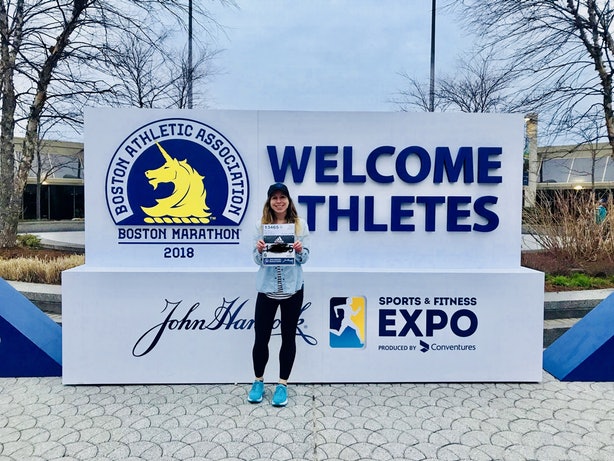
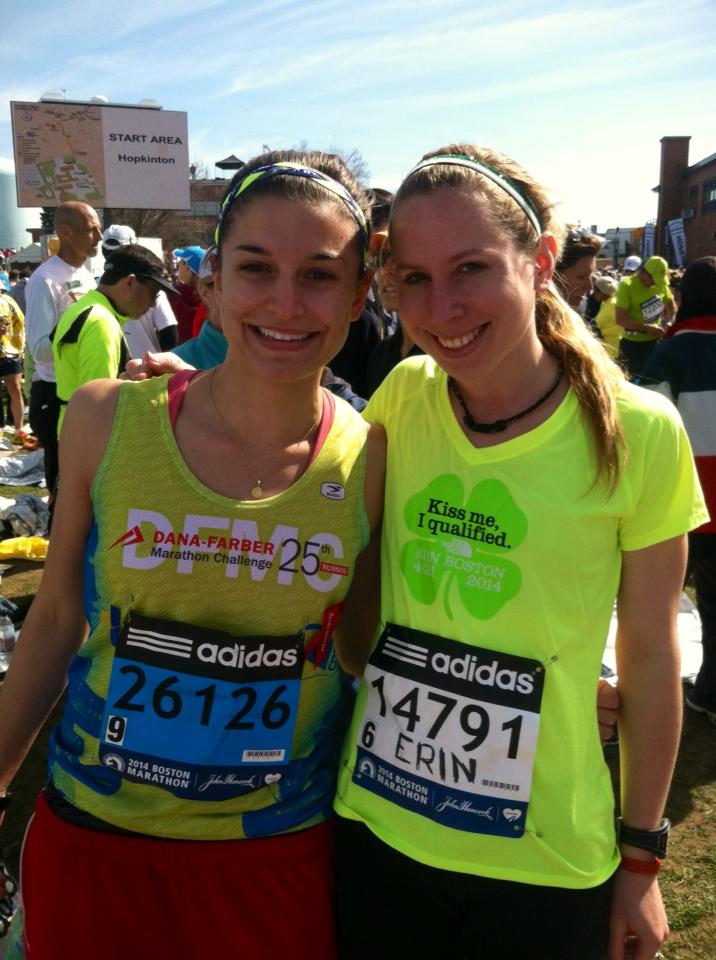
About two weeks ago, I saw something on my Facebook newsfeed that stopped me mid-scroll: the weather report for the upcoming Monday showed a light monsoon with teeth-chattering temperatures. On any other Monday, this type of disheartening weather would be, well, just another Monday. But it just so happened that this Monday was also the day that roughly 30,000 runners were planning to make the 26.2-mile trek from HopkintonMassachusetts, to Boston, an event formally known as the Boston Marathon.

As a registered runner who’d been training for the race for almost five months, I began to feel my excitement for the race turn into unease. Maybe it won’t be so bad, I thought. Maybe it will be like one of those snowstorms they make a huge deal about, and it doesn’t even flurry!

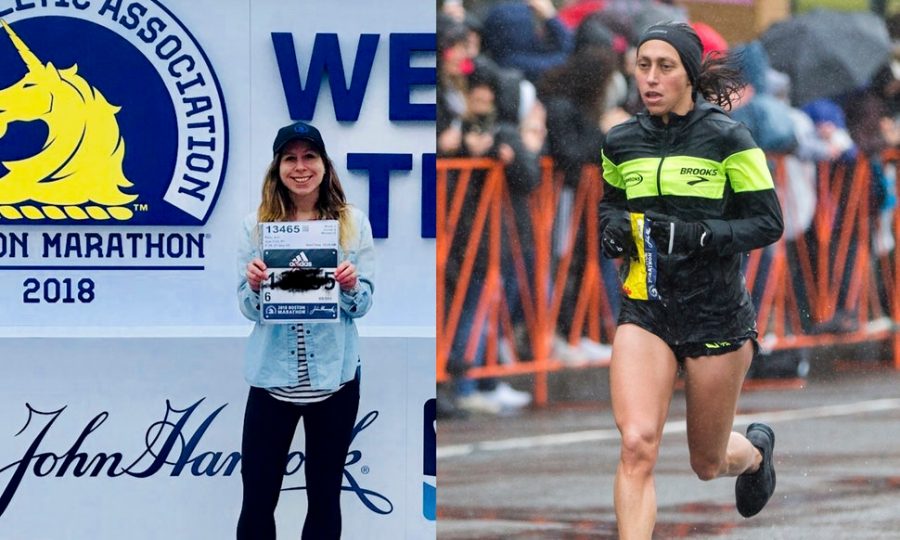
It ended up being a historic race for many reasons. Not only were the wet, cold, and windy conditions some of the worst many of the runners had ever seen, but Olympian Desiree Linden became the first American woman in 33 years to win the marathon. But more on that, later.

This was my thirteenth marathon, so perhaps I should have had an inkling that something would happen to throw it out of whack. I left for the race wearing multiple layers, a hooded poncho, and plastic bags secured with rubber bands around my sneakers. “It looks like you’re heading off to a day at a chemical plant,” my friend Laura joked as I geared up to face the elements. When I got there, the Athlete’s Village (where runners congregate before entering their starting corals) was worse than anyone anticipated: mud everywhere, puddles 10 Porta Potties wide, runners in rain getups even more ridiculous than mine. We laughed at the absurdity of it all — what else could we do?

e6a537d5-5d7a-4997-812a-89b9a0d37648-img_4685-1.jpg

Nevertheless, I had trained hard for this race and was determined not to let bad weather stop me from reaching my race goal — a marathon PR, or a personal record. But even the most elite runners had eschewed their runderwear for full rain jackets, which is pretty much unheard of in the professional running world. Despite the universal setback, there was only one real solution: continue to move forward, towards Boston.

I’d love to tell you that despite the conditions, I crushed the race. That I didn’t let it phase me. That, gosh, I thrived in the harsh conditions, just like the men’s winner, “citizen runner” Yuki Kawauchiwho blew everyone away by besting the pros to become the first Japanese man to win the Boston Marathon since 1987. But alas, I did not (thrive, that is). I kept up with my goal pace until about mile 13, when I started feeling an extra tightness in my quads, and, was I just imagining it, or was the headwind more powerful now?

I had trained hard for this race and was determined not to let bad weather stop me from reaching my race goal

Read the full story on Bustle.

6 Boston Marathon Charity Runners Who Could Use Your Help Right Now

The Boston Marathon is an amazing event for so many reasons. Not only is it an opportunity for athletes to showcase their strength and resilience, but it’s also a chance for the people of Boston and spectators from out of town to show their utter and complete love for the city, and its runners.

In addition to being a showcase of some of the world’s most powerful athletes, the Boston Marathon is also an incredible opportunity to raise awareness and money for life-changing causes, charities, and organizations. From research institutes that fund important cancer research and treatment initiatives, to hospitals with a mission of transforming outcomes for individuals who have suffered from traumatic injuries, many runners are out there not only chasing PRs, but their own personal finish line — like a world without cancer, or a better life for trauma survivors.

To learn more about some of the amazing charities and programs aligned with The Boston Marathon, I found six runners ready to toe the line in Hopkinton on Monday who are running for so much more than themselves. Check out their stories below to get inspired — and consider making a donation to their preferred charity or organization.

Kevin Walther: Stepping Strong, Brigham & Women’s Hospital
IMG_1037

“I was inspired to run my first Boston Marathon in 2016 after witnessing year over year the spirit and determination of countless runners with medical challenges. Following the marathon bombing, I wanted to give back in some way and found Brigham & Women’s Hospital. The Stepping Strong Center for Trauma Innovation does incredible work to fuel trauma and care research that is truly saving lives. Can’t wait for another 26.2 in Boston!

Fundraising page here 

Andrew Gorman: Dana-Farber Marathon Challenge

dfmc banner

This is my third year running for Boston for DFMC. I’ve raised ~$40k for cancer research in the past, and the team consistently raises $5+ million. I run and fundraise in memory of my mother-in-law Maryellen, my grandfather William, and in honor of several of my friends who have battled cancer. One hundred percent of every dollar raised goes to cancer research at Dana-Farber Cancer Institute, one of the top cancer centers in the country.

Fundraising page here (~$300 short of $13,100 goal)

Amanda Ordway: Boston Medical Care

5acb80a67dc0d_900x600 (1)

Running the Boston Marathon has been at the TOP of my bucket list for over 13 years.  I honestly envied all the runners when I saw them walking around the weekend before with their Marathon jackets, or even when they are bundled up in those aluminum foil blankets after crossing the finish line.  Seeing someone complete something that takes so much time, dedication, hard work, and perseverance, it’s just incredible.  I wanted to be one of those people that I’ve looked up to.  I wanted to push myself and see myself accomplish something so big! This year, I’m running on behalf of Boston Medical Centre. BMC is a truly remarkable hospital, and your support goes directly towards helping them continue to provide exceptional care, without exception to anyone who walks through their doors. For the past 15 years, Boston Medical Center has proudly participated in Boston’s historic marathon, raising more than $4.7 million for the hospital. 

Fundraising page here ($3,029 short of $10,000 goal)| @Arordway
*Amanda will be getting a custom race kit from adidas and The Woolmark company. The Woolmark Company contributed $5,000 to this runners’ charity program.

Joe Dusseldorp, Mass Eye and Ear

5a8600b2878ec_900x600

My name is Joe Dusseldorp, I am a plastic and reconstructive surgeon from Sydney, Australia, working at the Mass Eye and Ear in Boston. I have been inspired by the life-changing research taking place here. Much of this is possible due to generous donations given to the Mass Eye and Ear marathon team. 

I am a first-time marathon runner, and training for a marathon in Boston has been cold! So I am hoping to find supporters to help me fundraise to help Mass Eye and Ear reach its goals. One of my personal goals is to help to find a cure for children born without one or both ears. This condition known as microtia has no known cures and treatments vary around the world.

A Swiss company, Auregen Biotherapeutics, headquartered in Boston, is developing the ability to 3D print a patient’s missing ear using their own cartilage cells. Auregen has kindly offered to match any donations so that any donations I receive can go twice as far.

Fundraising page here
*Joe will be getting a custom race kit from adidas and The Woolmark company. The Woolmark Company contributed $5,000 to this runners’ charity program.

Danielle Maccini, Boston Medical Center

5ad12c601c68b_900x600

If you had asked me a year ago if I could run the Boston Marathon, I  would have laughed it off! Never in a million years would I think I’d be ready to take off in single digit days to run my first marathon, let alone the coveted Boston Marathon. But here I am!

My journey began a little over a year ago: I had the chance to work on a local film surrounding the 2013 Boston Marathon Bombings. I was hired as an actor, but the company also made a point to bring in real marathon runners as well as people who were there in 2013! Of course I knew what happened, but to hear these first-hand accounts truly opened my eyes! It blew my mind! The way these people described the running community and Marathon Monday was like nothing I had heard of before. I knew I needed to experience this for myself.

Fast forward to the 2017 Boston marathon, where I spent my first time actually watching and being a part of the crowd, and it was truly remarkable. That day I made a promise to myself that I  needed to run this race.

I committed to two things:

1. To raise some money and awareness for an amazing charity,

and,

2. To cross that finish line! I’ve always been really active but never a runner, so to pull his off I knew I  would have to work really hard. Through my journey I’ve not only grown stronger but I’ve met some incredible people, inspired others, and truly made a difference for my charity Boston Medical Center. Now all that’s left is race day, and with so many people backing me I’m ready to take it on! 

Fundraising page here | $719 short of $10,000 goal| @heyitsd123
*Danielle will be getting a custom race kit from adidas and The Woolmark company. The Woolmark Company contributed $5,000 to this runners’ charity program.

Malinda Ann Hill, Alex’s Lemonade Stand Foundation for Childhood Cancer

IMG_0470.JPG

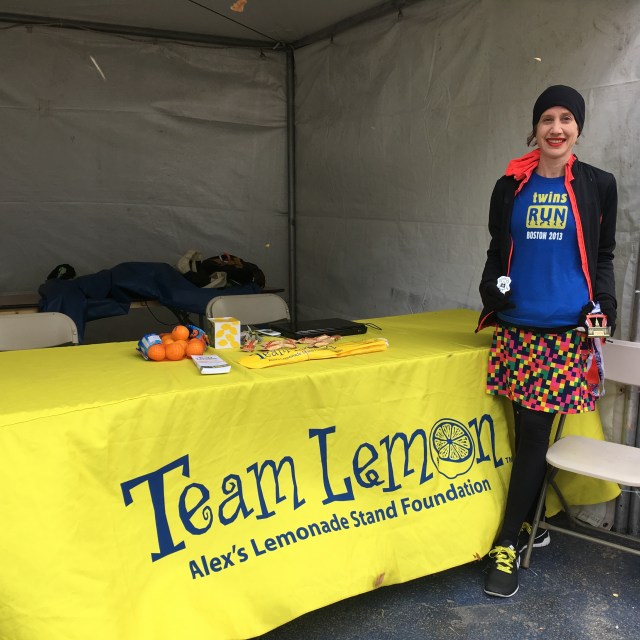
My twin Leah and I deemed ourselves Twins Run in Our Family so we could share our experiences running together to raise awareness and funds for Alex’s Lemonade Stand Foundation for Childhood Cancer. I am running Boston in memory of Leah’s brother-in-law and our grandmother, both of whom died of cancer. Alex’s Lemonade Stand Foundation was started by 4-year-old Alexandra “Alex” Scott who died of neuroblastoma in 2004. Alex’s Lemonade Stand is very close to my heart since I’m the bereavement coordinator at the Children’s Hospital of Philadelphia where Alex was treated. By age eight, Alex had raised $1 million for cancer research. As of today, the foundation has raised $150 million for cancer research. I am motivated by how Alex achieved so much in her short life. Her legacy lives on and continues to inspire others to make a difference in the lives of children with cancer.

Fundraising page here | $395 short of $1,000 goal 

20 Boston Marathon Finishers Share The One Thing They Wish They Knew Before The Race

I remember my first Boston Marathon. I trekked out to Coolidge Corner with some of my friends, armed with sunscreen and Nalgene bottles filled with vodka. What I witnessed was terrifying: There were faces pitted with pure exhaustion, individuals limping along the course defeatedly, and way more bloody nipples than I ever thought I’d see in one day. At one point, a group of drunk college kids tried to cross over the route and knocked over some helpless runners along the way. Later, a runner pulled over in front of our group and tried to take a gulp from my friend Eric’s boozy hydration pack as he embarrassedly stammered, “Sir, it’s alcohol.”

Pure shock and limited knowledge about endurance races aside, I felt so inspired by all of the runners making the journey from Hopkinton to Boston that after I returned to campus, I ran on a treadmill in an empty Northeastern Marino Center, watching (mostly inebriated) college kids return from their cheering posts along the course in droves outside the window.

Several years, one graduation, and two of my own marathons later, I would get my own chance to make the epic right onto Hereford Street and left on Boylston that so many runners dream of. Though I’d watched the showdown happen live for five consecutive years and knew certain things — like if I took a drink from a college kid on the course, there was an 80 percent chance it would be beer — there was still a lot I didn’t know about how the race is organized, and what exactly this complicated course entails.

To help those running the course for the first time this year, I asked finishers of varying years past: What’s the one thing you wish you knew before running the Boston Marathon?

Before the Race: What You Need To Know

11150462_10155480391615352_1493165761750384174_n

Write Your Name On Your T-Shirt
“I’ll never forget how badly I was feeling during the 2016 marathon when I heard a random guy yell my name, and then meet my gaze to tell me that I was looking great. The realization that he had picked me out from the crowd of runners propelled me forward. Hearing any spectator shout your name because you have it on your shirt — or maybe even written vertically in Sharpie on your biceps — will at the very least make you smile, and at most give you a much-needed energy boost!” —Michele Gorman

The Expo Will Be Crowded
“The day before the marathon is the worst day to go to the expo. Everyone assumes it’s like other races where you can get in no problem. The line to get into the expo snakes around the building and then snakes all around the inside as well. Go on Friday!” —Brad Castillo Continue reading “20 Boston Marathon Finishers Share The One Thing They Wish They Knew Before The Race”

Race Review: Sleepy Hollow Half Marathon

As most of you know, I’ve been training for the Boston Marathon coming up on April 16. It’s the first time I’ve taken my marathon training seriously in a long time, and it’s been quite a haul. Luckily, I have been working with a great coach, Christopher Baker. Even though I’m a run coach and hold many others accountable, I find it really hard to hold myself accountable when I’m planning for so many other people, so it’s helpful to have someone taking the guesswork out of my training. While the workouts have been quite grueling — and balancing them with everything else I have going on in life (work, school, coaching, attempting to have a social life) has been even more demanding — I’m happy to have a schedule and some kind of consistency in my life.

As a tune up, I ran the Sleepy Hollow Half Marathon on Saturday. It was a wonderful opportunity to see some real-time results of this training plan in action. A friend had suggested the race after the drawing results for the New York City Half came out, and while I didn’t have any desire to run another NYRR race, I liked the idea of a small town race in a new and different place. While the hills of the course were intimidating, I liked that there was no pressure to PR, and the idea of getting a race in before the marathon.

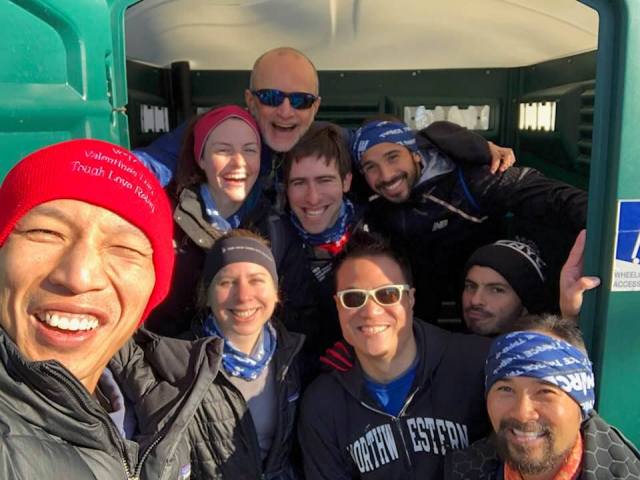
A few friends from The Most Informal Running Club, Ever (NYC), and I headed up to Sleepy Hollow via the MetroNorth train, and were able to walk to the race start from the train. The weather was chilly, but sunny, so it was nice to not freeze our butts off before the race like the runners in the NYC Half had done the weekend before. We even had time for our tradition of taking a photo in the Port-A-Potty (don’t ask why).

29512705_10216019860388257_44471192411846527_n Continue reading “Race Review: Sleepy Hollow Half Marathon”

Negative Splits Volume 3.0

1b114ca4-e493-4f7d-ac04-3568c07e730e

Hey everyone! I haven’t exactly been on my game when it comes to sending you updates, and I apologize. Between general life and marathon training, I’ve been busier than expected. What motivated me to start again was spectating at the United NYC Half this weekend. It’s always so inspiring to see runners of all ages and capabilities come together under one race and chase for one communal finish line.

With that: Welcome back to another edition of Negative Splits with Coach EK (volume 3). I’m here to talk to you about everything running-related, from industry news, to interesting happenings, to coaching advice.

What’s worth reading this week

Burn the Boat by Peter Bromka

This essay by Peter Bromka is a must-read for anyone who’s ever chased a running goal that you aren’t quite sure is in your reach. Bromka shares how he is chasing an OQT (Olympic Qualifying Time), despite the odds being stacked against him. His philosophy is simply, ‘What if?’ As a recreational runner myself, it helped to read about his determined pursuit — within reason. Though Bromka acknowledges his running dreams are not above his commitments as a husband and father, he is focused on stepping up to an opportunity merely because he was given the chance. He also documents his training process, breaking down his progress and how exactly he overcame each time barrier, literally sharing his struggle (and highlighting all of the hard work that has gone into each breakthrough). He writes, “The pursuit of an audacious goal is as worthy a lifestyle as I can imagine.” To which I say, same.

When You Can’t Run by Jen A. Miller

Jen A. Miller is one of my favorite journalists (and she’s the author of one of my favorite books: Running: A Love Story). In this piece, she’s writing about one of my least favorite topics: sidelining injuries! All runners know that not running sucks, and if you’ve ever had to take a break, you know that the struggle is real. Luckily, Miller has detailed what to know when you’re forced to take a running hiatus, and some tips on how to cope.

Read the full newsletter here and subscribe

The Runner Diaries — Allie Kieffer

Welcome to The Runner Diaries, where we’re sharing a behind-the-scenes look into a week of training with runners of varying ages, paces and GPS coordinates. Get The Runner Diaries delivered to your inbox, here

This week, we have 30-year-old Allie Kieffer, a professional runner for Oiselle who placed fifth in the 2017 New York City Marathon. Kieffer is currently training in Iten, Kenya to prepare for the United NYC Half and the London Marathon. Follow along as she logs roughly 115 miles while living like a local.

The Run Down

Name: Allie Kieffer
Location: Iten, Kenya
Age: 30
Training for: NYC Half Marathon, London Marathon
Team or Club Affiliation? Oiselle & New York Athletic Club
How long you’ve been a “runner:” Forever! I joined my first running club when I was in kindergarten 🙂
Weekly mileage: 115

Runner’s Statement

I’ve been training in Iten, Kenya for the past 6 weeks to prepare for the NYC Half Marathon and London Marathon. In the past I’ve done altitude stints in Boulder, Colorado and Flagstaff, Arizona. I’ve always really enjoyed the mountains lifestyle and have responded well to the heightened elevation, so when the opportunity arose in January to train at altitude in a distance running mecca with a warm climate, I couldn’t pass it up!

After racing the Ooredoo Half Marathon in Doha, Qatar January 12th I got on a plane for my first trip to Africa! Since landing in Kenya, Betsy Saina and I have become fast friends- she has helped me set up an apartment, find a pacer (someone who does all of my runs with me), and figure out life in another country. Each week has gotten better than the last and I am excited to share with you my final week in Iten before returning to the US!

Saturday Feb 24th | Day One

5:40AM – woke up before the alarm! I make some shroom coffee and took advantage that it was only 9:40PM home in NY to call some loved ones!

6:10AM – head out the door with Chelsea (a friend from college that came to visit me in Kenya!) to meet Julia (a Canadian I recently met and have become friends with) and Dickson (my pacer). Usually we travel down to a lower altitude and flatter road for a fast, supported long run. As the sun comes up, matatus (vans for hire) follow groups of gazelle-like striders, handing out bottles of water and whatever super nutrition is packed inside. I have been sick for the past few days, though, and didn’t know how far I’d make it, so this week we ran from my apartment at 7,800ft to Kipsang Rd (named after Wilson Kipsang because he owns a nightclub on it).
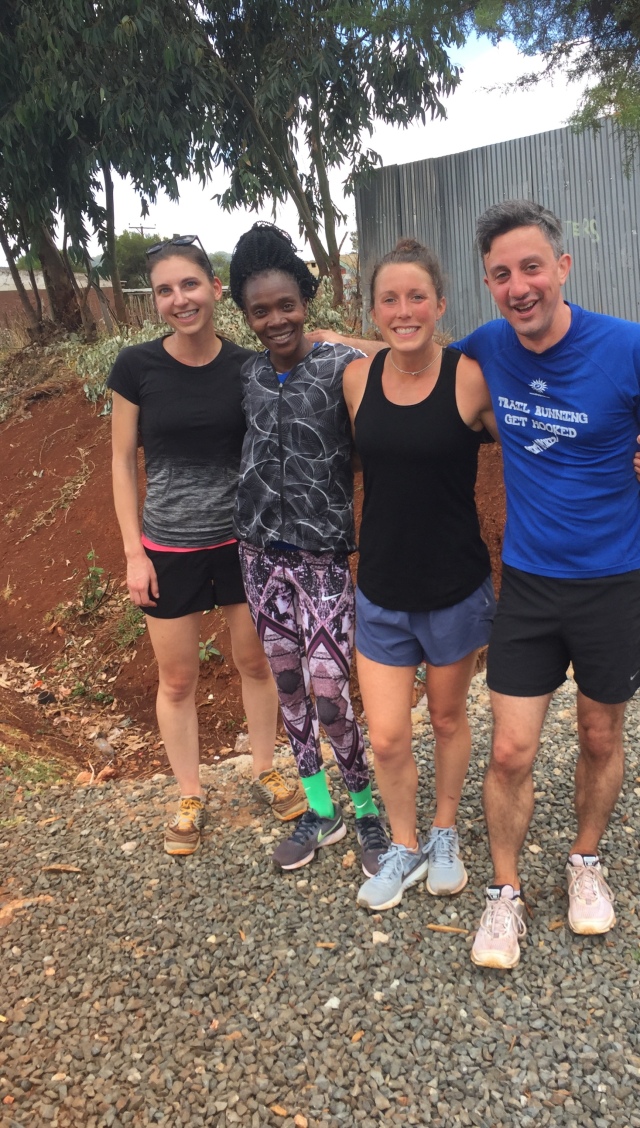
image2 (1)

There’s no matatu today, and how far we’ll all go is a mystery; it’s only Chelsea’s second day in Kenya! I immediately feel awful and we shuffle for a few warm up miles. After 3K we meet the gang, plus a new friend, Edward, who is Dickson’s neighbor. After a mile he lets it slip that he won the Marugame Half Marathon in 60 minutes earlier this month.

Then, he zips off, putting distance between us like we’re standing still. I start to warm up and we click off 7:10-7:20’s for the next few miles. The rolling hills remind me of Magnolia Rd in Boulder, Colorado.
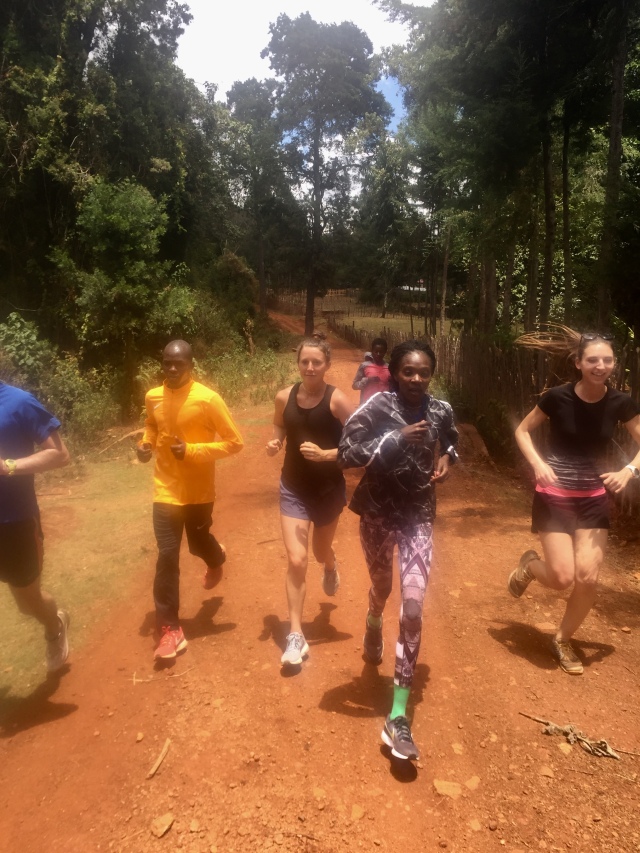
image3 (1)

At 10 miles we turn around, and I pick up the pace a bit and distance myself from the group. Just as I was starting to feel really strong I ran into Edward again. To my surprise, he turned and ran with me. We immediately drop the pace. There’s like an inherent thought with Kenyan men that they should pace and push the women. For the next 8 miles I hung on as best I could as he kept looking back to make sure he wasn’t dropping me.

After 20 miles I was back at the paved road and 3K from home. I decided to catch a motor bike back home with Chelsea and be happy making it through 20 miles!

Watch data: 20 miles in 2:24:20. Elevation gain: 1,128ft

9AM – arrive home to a buffet of omelette, pancakes, and tea!

11:30AM – Chelsea and I walk through the local market. Every Saturday locals set up shops and sell their goods in a field by the center of town.

1:30PM – head home for green grams and rice! We are so spoiled!

3:30PM – second run! I don’t usually double after a long run, but I missed a couple of doubles during the week because I was sick. I take Chelsea through my favorite route in the Singore forest.

Watch data: 4.83miles in 41:23 (avg page: 8:34). Elevation gain: 341ft

5:30PM – Julia comes over to hangout with Chelsea and I!

6:30PM – YouTube interview with Greg White (watch it here).

7:30PM – dinner – chapati (a slightly sweet, thick and airy tortilla-like African staple. it’s typically dipped in stew, but it tastes great plain too), kale, lentil, butternut squash soup, and my favorite fruit salad of banana, mango, pineapple, and avocado.

It’s not typical in Kenya to have dessert, but fruit salad is a great, healthy alternative. I believe in eating a diet rich in whole foods and a minimal amount of processed foods. In the US, I don’t usually eat very many simple carbs like bread and opt for something like a sweet potato instead, but in Kenya I eat like a local.

10:30PM – full belly and lights out!

Total daily mileage: 25 miles! Continue reading “The Runner Diaries — Allie Kieffer”

In The Taper We Trust…Wait, Do We?

If you’re signed up for the United Airlines NYC Half, you’ve probably entered the period of your training that just might the most difficult: the taper.

For what it’s worth, the taper is typically the two or three week period leading up to a race when a training program starts ‘tapering off’, if you will, calling for less running, fewer miles, and more recovery.

If you’re wondering, ‘Wait! I thought the taper was a time to rest and relax! What’s so hard about that?’, well, the only way to answer that is to ask another question: Have you ever known a runner to be good at relaxing?

Sure, resting is good in theory — especially when paired with brunch and a delicious beer after a long run or hard workout. But after a day or two, most runners are itching to get back to work. Working hard, putting forth our best efforts, and breathing heavy just come naturally to endurance athletes.

While I’d love to applaud those who are motivated to run more throughout the taper period (while simultaneously wondering where the heck that motivation was during your last speed session….), as a running coach I firmly have to advise you to slow your roll and respect the taper period. A productive and effective taper will allow your body to repair, recover, replenish, and regroup before you tackle the biggest challenge of your training plan: race day.

Here’s how to make the most of your taper for a successful race.

1. Do Less

And I don’t just mean running less. Yes, reducing your weekly mileage is an important part of every taper, as resting your muscles means an increase in strength and power output, increases in VO2 max and a more efficient running economy. But don’t try to fill up the time you’d normally spend running doing a million other activities. Try to stay off of your feet as much as possible, and give yourself time to relax, sleep more, and actually rest. While overtapering is a real thing, it’s rarely as threatening as the draw of taking on more social or work commitments that can lead to exhaustion. Continue reading “In The Taper We Trust…Wait, Do We?”