Why I Have Two Instagram Accounts

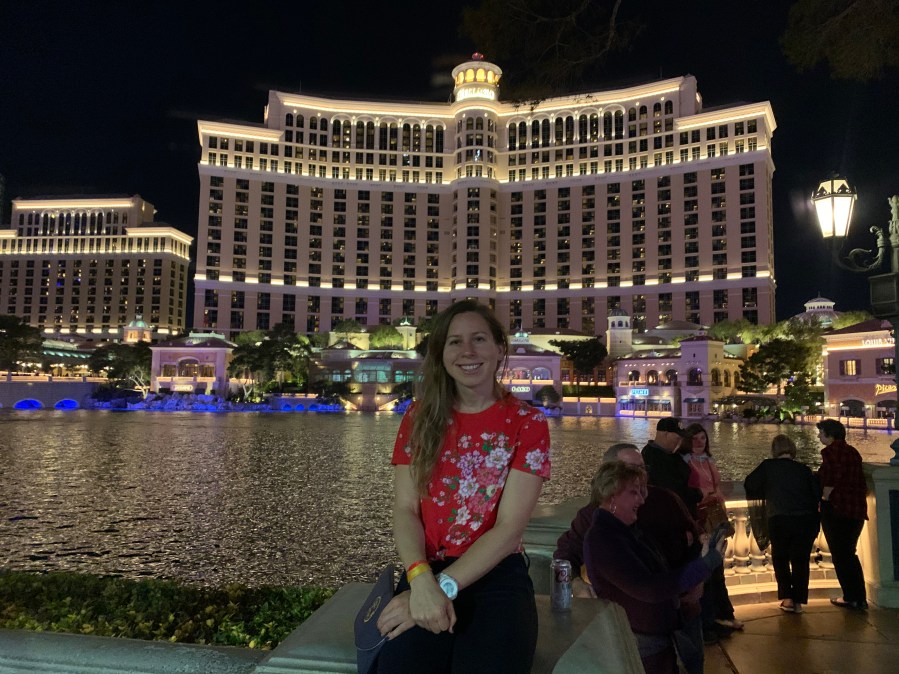
I was in Las Vegas recently for the Rock n Roll Half Marathon (blog post about it TK, I promise!) and, as per usual, had bitten off more than I could chew. Not only was I slated to run a half marathon on Sunday afternoon, but I had agreed to document my experience for Elite Daily’s Wander or Bust series (article also TK), which meant that I had a ‘shot list’ of photos I needed to take to be included in the piece. 

I love social media, but I’m better at making memes than taking gram-worthy landscape shots, so this was a challenge. Luckily, I had my good friend Chris there to help me. Jokingly referring to him as my ‘instagram husband’ for the weekend, I had him take my photo seemingly every five minutes. Chris was a great sport about it (He’s no stranger to my #freelancelife adventures, after all. He once took a MegaBus with me to Philadelphia from New York for 12 hours to run a beer mile put on by an events company I managed the social media for). But at one point over the weekend, he asked a very normal question: Which Instagram handle are you going to post these on? And why do you have two Instagram handles, anyway?” Continue reading “Why I Have Two Instagram Accounts”

The Next Level of Marathon Training is… Probably Too Expensive For You

I was enjoying dessert in the bar of the Omni Hotel in San Francisco the other evening when my boyfriend’s father passed me a section of The Wall Street Journal. “There’s a running article in here,” he offered, in what I can only assume was his way of showing me he’d listened when Justin told him what I liked to do in my spare time. 

“Thanks!” I took it, not wanting to seem ungrateful, and started to read. 

In the piece, The Next Level of Marathon Training is Here, the author shared her “secrets” to gaining an 11-minute PR in the London Marathon. Every single one of them prompted an eye roll from me, and my take was echoed on Twitter. From jumping into a CVAC machine to improve her VO2 max to using a three hundred and fifty dollar glorified car buffer to ease her sore muscles, every recommendation—especially the $55 water bottle that literally reminds you when to drink—was an expensive (and usually impractical) media-hyped product or service.

Unless your gym or physical therapy clinic has a TheraGun or NormaTech recovery boots you can rent or use, it seems silly for common, everyday athletes who aren’t earning any purse money upon crossing the finish line to pursue these out-of-this-world recovery techniques. An hour in the CVAC at ReCOVER, New York’s first recovery studio, costs $100. My clients pay less than that for an entire month of my tedious training plan scheduling and coaching wisdom!

For those of us who don’t have an extra $1000 around per month to spend on fancy recovery buffoonery, here are my favorite ways to gain a competitive edge: Continue reading “The Next Level of Marathon Training is… Probably Too Expensive For You”

Running In The Heat Can Make You A Stronger Runner. Here’s How To Do It Right.

For runners, summer means more than weekend getaways and trips to the beach—it’s also synonymous with fall marathon training. Odds are, if you’re planning on running one of America’s iconic fall road races, like the New York City Marathon, the Chicago Marathon, or even the Philadelphia Marathon, you’re going to be running through some pretty hot weather. 

Now that I live on the West Coast, temperatures are way more ideal for summer running, but even I’m not immune from the effects of the sun. Additionally, summer travel—whether I’m going back to the east coast or just an hour or two away—exposes me to a far wider range of elements. 

Running in the heat can be difficult, and even more strenuous for certain people. But here’s why you shouldn’t immediately dismiss hot weather runs: Studies have found that running in the heat won’t just increase your rate of perspiration (which is helpful for cooling down your body), but it can also increase an athlete’s blood plasma volume, which leads to better cardiovascular fitness. Training in the heat can also reduce overall core temperature, reduce blood lactate, increase skeletal muscle force, and even increase your training capabilities in colder temperatures.

That’s right—some experts support the claim that heat acclimation can actually be more beneficial than altitude training when it comes to positive physiological adaptations. Santiago Lorenzo, a professor of physiology at Lake Erie College of Osteopathic Medicine and former decathlete at the University of Oregon, told Outside Magazine that he believes heat acclimation provides “more substantial environmental specific improvements in aerobic performance than altitude training,” citing the fact that heat training does a better job at increasing VO2 max than altitude, and also makes athletes better at dealing with a wider range of temperatures. 

However, the benefits of training in elevated temperatures doesn’t change the fact that summer running can get us all hot and bothered. So many things can go wrong, from pesky annoyances like chafing, to more dangerous outcomes like heat stroke. To help you stay hydrated and happy during your long runs this summer, here are my top 10 tips for hot weather runs. Continue reading “Running In The Heat Can Make You A Stronger Runner. Here’s How To Do It Right.”

On Body Positivity, During NEDA Month

I don’t talk a lot about body image–not because I don’t have thoughts on it, but because I don’t want to say the wrong thing or be insensitive. However, the fact of the matter is that I was incredibly insecure about my body for a long time. Unfortunately, I think this is an issue that affects everyone at some point: There’s always media images telling us what is and isn’t acceptable, and what is and isn’t considered to be beautiful. Now with social media, we are constantly exposed to “flawless” images of friends, models, influencers, and others–many of whom appear to be super confident about themselves and how they look. In part because of how much our lives are on display, I think it’s more difficult to today than ever before to become secure in your own skin. That’s why I want to talk about how running has affected my body image for the better—especially when there is so much already out there about the link between negative body image and running.

Here’s something I don’t usually admit: I originally started running to lose weight. In my early teenage years, I carried some uncomfortable extra pounds around my waist that at the time were probably just due to not hitting puberty yet, but in the moment, made me feel hideous. I didn’t love the person who looked back at me in the mirror. I hate to think that my relationship with something I love so much now began as a vain endeavor, but it did. The summer between eighth grade and my freshman year of high school, I cut out all snacks in between meals. I would eat a single Lean Pocket (lol, remember those?) for breakfast, and started running for 20 or 30 minutes in the evenings. At the time, I hated running, but I equated the practice with burning calories. Continue reading “On Body Positivity, During NEDA Month”

The Best Things I Wrote In 2018

I applied, got accepted, and started going back to school (across the country) in 2018, so I didn’t get to write as much as I would’ve liked to. Regardless, here are my favorite editorial bylines from the last 12 months.

1. Pushing for a PR Sabotaged Me. Here’s How Embracing Failure Led to Better Results | for Runner’s World, link here

I was approached by Marissa Stephenson, an editor for Runner’s World, to see if I had any ‘interesting, personal stories’ to share. Of course I did! I am the queen of ‘I just have a lot of feelings.’ This piece got a brief space in the September 2018 print issue, but was featured as a longread on the digital site thanks to fitness editor Molly Ritterbeck.

2. No, Running Isn’t Always the Best Therapy | for Runner’s World, link here

This was my first piece ever in Runner’s World, and one of the most personal stories I’ve ever shared on the Internet. I got so much positive feedback, it was well worth it to put myself out there. Continue reading “The Best Things I Wrote In 2018”

Running the 2019 NYC Half? I’ve Got A Plan For You

If you’re running the United Airlines New York City Half Marathon on March 17, 2019, and are a little lost when it comes to where to begin or how to train, I’ve got a plan for you!

Customized training plans tailored to your skill level and personal goals created by me (RRCA-certified running coach Erin Kelly) will be delivered to your inbox within ~3 business days.

Plans are $150 and can be payable via Venmo.

What are you waiting for? Sign up here to get a customized training plan today.


Running Through the Winter: How To Prepare For Cold Weather Running

While spring races are wonderful, they also mean you must power through many cold weather runs. Of course, winter running isn’t easy. It’s difficult to get out the door when it’s cold outside—or worse, it’s snowing and/or there’s ice on the ground. That’s why it’s important to be prepared for cold weather runs and to have a backup plan for days when running outside is unbearable.

The Gear

Perhaps the best thing you can do when preparing for cold weather runs is to have multiple layers. That way, you can shed a layer, or add one on without much difficulty according to your personal preference. For cold weather runs, up top I like to wear a base layer like UnderArmour paired with a form fitting (AKA not bulky) fleece sweater and a vest. On the bottom, thick running tights (with plenty of pockets for tissues and fuel!) and thick socks usually do the trick. However, everyone is different. Maybe you need more than a vest over your fleece to keep you warm. Opting for a wind-resistant jacket might do the trick. Ski gloves are a good choice for keeping your hands warm, or if you’re in a bind, fuzzy socks over your regular gloves might do the trick.

When it’s wet and/or snowy outside, bagging your feet INSIDE your shoes can keep water and dampness from seeping in to your toes. You may look silly, but you’ll be WARM.

Another thing I like to do (beyond wearing a headband to cover my ears) is to cover my face as much as possible during winter runs to keep it from getting windblown and chapped. You can use a neck warmer, bandana, or the more breathable BUFF. Adding a reflective BUFF to your outfit will keep you seen on the street during dimly lit runs without sabotaging your warmth.


How To Layer

You may think starting a run feeling cozy is the way to go, but you should actually layer up so that your first mile or so are less than comfortable. Don’t worry — you’ll warm up as you start to sweat and heat up. Starting off too warm, or too cozy, could cause you to overheat too quickly. The idea is that your body temperature will rise as you run, leading to a more comfortable scenario a few minutes into your route.


Have A Backup Plan

Some days, it will really be too cold, too icy, or too dangerous to run. It’s helpful to have a backup plan during those times, whether it’s a bodyweight circuit you can do at home to at least get some exercise in, or by joining a cheap gym to have access to a treadmill. Don’t get stuck without a back up plan, and don’t let bad weather be an excuse for not getting your workout in!


Stay Focused

Above all things, when the weather gets tough, remember: So are you! The weather is always a gamble on race day. The chances of having beautiful weather versus a wet and windy race are quite similar, so treat your training runs as practice to make yourself prepared for whatever comes your way!

9 Running Resolutions for 2019 That Have Nothing To Do With A PR

Choosing a running-related New Year’s Resolution can be difficult. As I started to think about what mine would be for 2019, nothing immediately came to mind. I feel like the most common running resolution is to achieve a personal record or personal best in a specific race distance. However, I feel like that run resolution is a little tired—and I spent a large part of 2018 chasing a PR in the marathon. I’d like to celebrate achieving that goal for a little bit, rather than immediately set my sights on a new personal best.

As part of my brainstorm efforts, here are 9 running resolutions that have nothing to do with a PR.

  1. Attempt a new race distance. If you’ve been all about marathons lately, why not test your speed at a 5k?
  2. Choose a challenging course. If you’ve been drawn to flatter courses in the past, why not up the ante with some hilly terrain?
  3. Join a new running group. Sometimes, your standing run club can fail to challenge you. Why not try jumping in another group’s meetup for a workout or two? At the very least,  you’re bound to meet a new running buddy.
  4. Make stretching a priority. Whether it’s by going to yoga once a week or making it a habit post-run, we could probably all stand to stretch a little more.
  5. Resolve to run early. By changing your workout schedule to running in the mornings, you’ll be less likely to skip workouts after a long day.
  6. Run for fun. Sign up for a relay race, sport a costume for your next 5k, plan a running-and-brunch date with a friend you haven’t seen in awhile, or find another way to make running a just-for-fun, just-for-you activity.
  7. Try new terrain. If you’ve never given trail running a go, now might be the time. It’s fun to focus less on pace, and more on the ground beneath you, and the nature surrounding you.
  8. Start speed work. If you’re more of a conversation-paced runner, now might be the time to track on some speedier workouts to your repertoire. Here are five speed workouts every new runner should try.
  9. Start a runstreak. Okay, runstreaks—or the act of running every single day for as many days as possible—is controversial. And rest is VERY important. But if you are in good health and understand your limits, trying out a runstreak could be a great way to stay motivated and push yourself daily.

Here’s How To Commit To Your Next Race

Taking on the challenge of a new goal is no easy feat, but with the correct training and preparation, there’s an incredible opportunity to have a wonderfully rewarding experience. Of course, that’s not to say that taking on whatever distance you’ve set your sights on won’t come without its difficulties. However, with the correct mindset and commitment to your goal, you’ll be prepared to navigate the intricacies of training.

 Here are a few ways that might make it a little bit easier.

1. Find Your Reason:

With every undertaking, it’s important to recognize why you are choosing to do what you’re doing. Self-motivation is incredibly important, and powering through early morning training runs and/or difficult workout sessions will be all the more easier when you have a good reason for it. Whether your reason is to improve your health, take on a challenge you never thought you’d accomplish, or knowing you are raising money for an incredible cause, take a few moments this week to think about your individual ‘why,’ and write it down. Put your why—or your whys!—somewhere you’ll see them every day, so you’ll reinforce your own reasoning on yourself on days you might lose sight of your goal. Continue reading “Here’s How To Commit To Your Next Race”

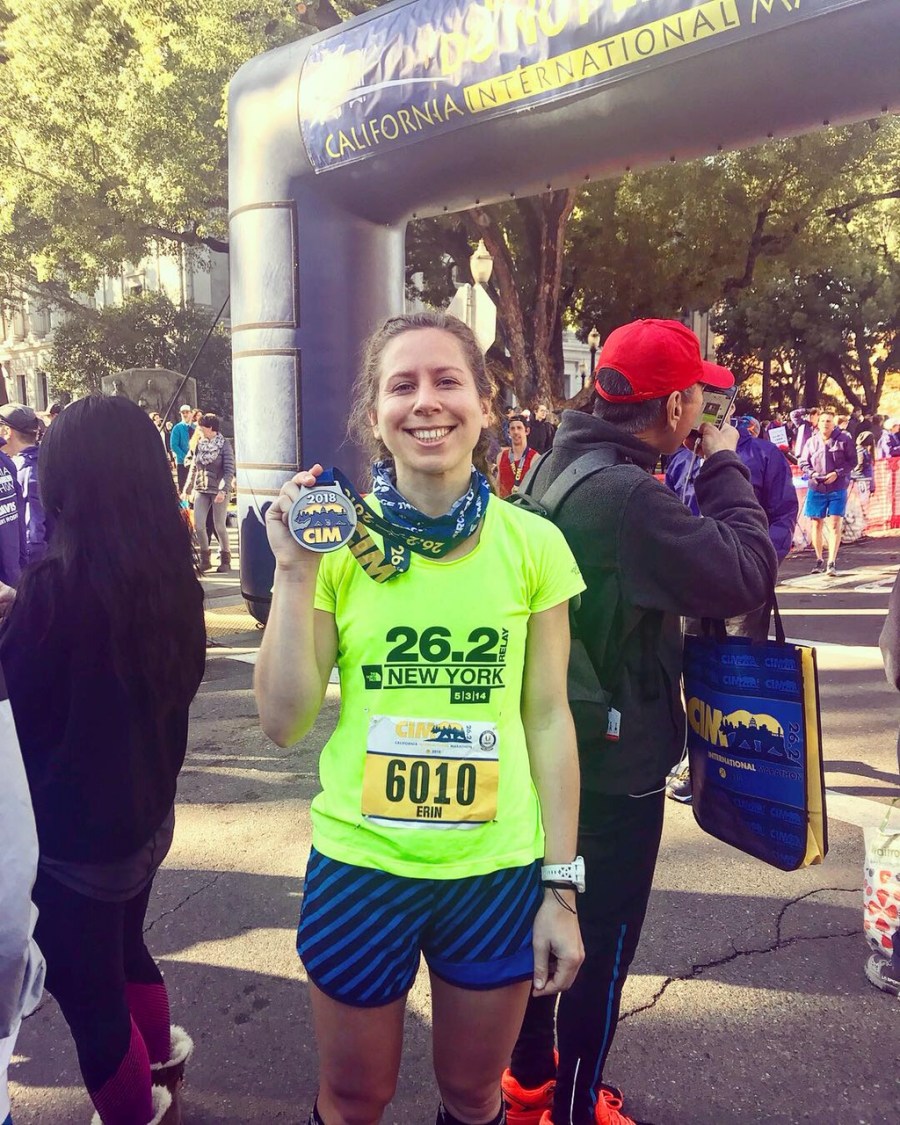
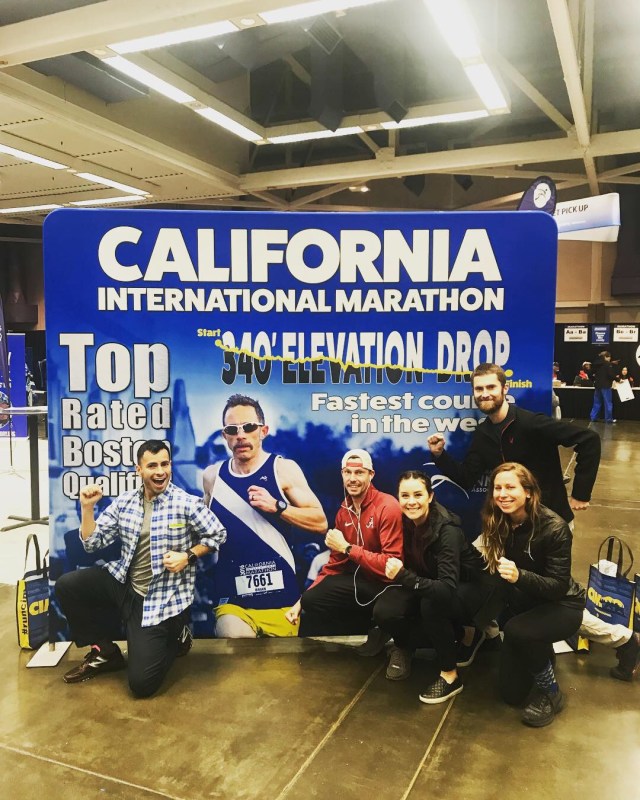
The Sac, Squeeze Burger, and Knee Circles: California International Marathon Race Recap

I signed up for the California International Marathon after a successful go at the San Francisco Marathon in July, and some polite (yet persistent!) encouragement from a friend. I had heard about the race’s notoriety for being a flat and fast course from many others, and the combination of a few friends already confirmed to run and the event at 99 percent capacity months out, my FOMO got the best of me, and I signed up.

As per my usual race weekend shenanigans, I traveled with a group of friends—Victor, Jeremy, Erika and Nick—to Sacramento the day before the race to hit up the expo and get our bearings before race day. We stayed in an Airbnb about six miles from the Sacramento Convention Center (where the race expo was), which I like to do versus staying at a hotel because there is more room to spread out the night before (and there’s a kitchen to make breakfast the morning of the race).

IMG_0685


After visiting the expo, grabbing dinner (we ate at Big Stump Brew Co—I got a chicken sandwich), and stopping at a CVS to grab last-minute necessities (vaseline for Victor, cold brew for me, toilet paper for all of us), we retreated back to the house, made a quick game plan for the morning and most of us were in bed by 9pm. Continue reading “The Sac, Squeeze Burger, and Knee Circles: California International Marathon Race Recap”