20 Boston Marathon Finishers Share The One Thing They Wish They Knew Before The Race

I remember my first Boston Marathon. I trekked out to Coolidge Corner with some of my friends, armed with sunscreen and Nalgene bottles filled with vodka. What I witnessed was terrifying: There were faces pitted with pure exhaustion, individuals limping along the course defeatedly, and way more bloody nipples than I ever thought I’d see in one day. At one point, a group of drunk college kids tried to cross over the route and knocked over some helpless runners along the way. Later, a runner pulled over in front of our group and tried to take a gulp from my friend Eric’s boozy hydration pack as he embarrassedly stammered, “Sir, it’s alcohol.”

Pure shock and limited knowledge about endurance races aside, I felt so inspired by all of the runners making the journey from Hopkinton to Boston that after I returned to campus, I ran on a treadmill in an empty Northeastern Marino Center, watching (mostly inebriated) college kids return from their cheering posts along the course in droves outside the window.

Several years, one graduation, and two of my own marathons later, I would get my own chance to make the epic right onto Hereford Street and left on Boylston that so many runners dream of. Though I’d watched the showdown happen live for five consecutive years and knew certain things — like if I took a drink from a college kid on the course, there was an 80 percent chance it would be beer — there was still a lot I didn’t know about how the race is organized, and what exactly this complicated course entails.

To help those running the course for the first time this year, I asked finishers of varying years past: What’s the one thing you wish you knew before running the Boston Marathon?

Before the Race: What You Need To Know

11150462_10155480391615352_1493165761750384174_n

Write Your Name On Your T-Shirt
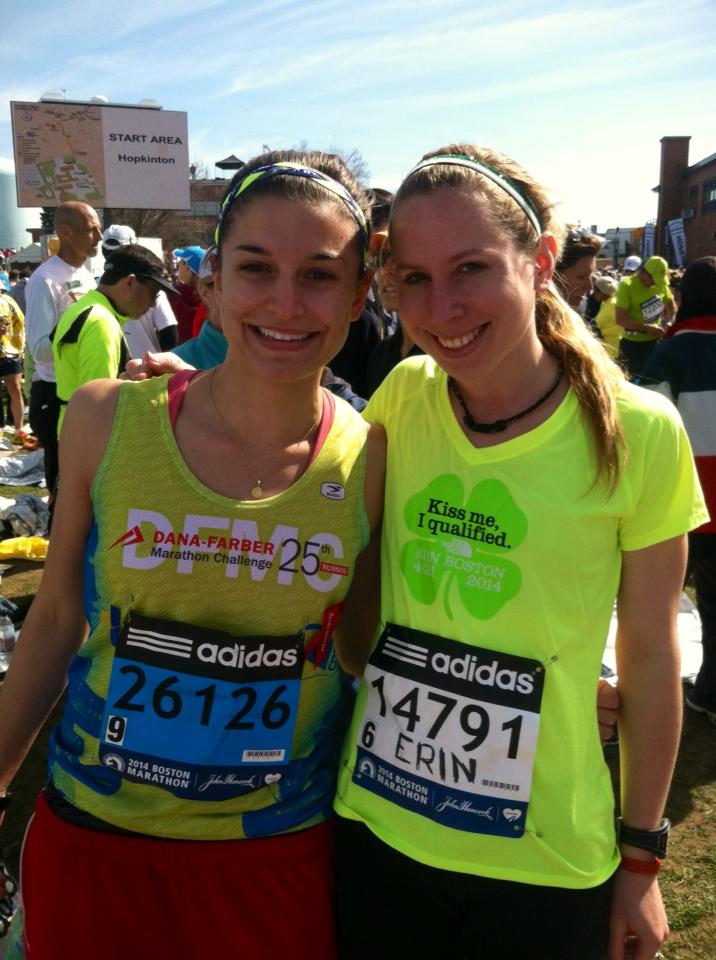
“I’ll never forget how badly I was feeling during the 2016 marathon when I heard a random guy yell my name, and then meet my gaze to tell me that I was looking great. The realization that he had picked me out from the crowd of runners propelled me forward. Hearing any spectator shout your name because you have it on your shirt — or maybe even written vertically in Sharpie on your biceps — will at the very least make you smile, and at most give you a much-needed energy boost!” —Michele Gorman

The Expo Will Be Crowded
“The day before the marathon is the worst day to go to the expo. Everyone assumes it’s like other races where you can get in no problem. The line to get into the expo snakes around the building and then snakes all around the inside as well. Go on Friday!” —Brad Castillo Continue reading “20 Boston Marathon Finishers Share The One Thing They Wish They Knew Before The Race”

Negative Splits Volume 3.0

1b114ca4-e493-4f7d-ac04-3568c07e730e

Hey everyone! I haven’t exactly been on my game when it comes to sending you updates, and I apologize. Between general life and marathon training, I’ve been busier than expected. What motivated me to start again was spectating at the United NYC Half this weekend. It’s always so inspiring to see runners of all ages and capabilities come together under one race and chase for one communal finish line.

With that: Welcome back to another edition of Negative Splits with Coach EK (volume 3). I’m here to talk to you about everything running-related, from industry news, to interesting happenings, to coaching advice.

What’s worth reading this week

Burn the Boat by Peter Bromka

This essay by Peter Bromka is a must-read for anyone who’s ever chased a running goal that you aren’t quite sure is in your reach. Bromka shares how he is chasing an OQT (Olympic Qualifying Time), despite the odds being stacked against him. His philosophy is simply, ‘What if?’ As a recreational runner myself, it helped to read about his determined pursuit — within reason. Though Bromka acknowledges his running dreams are not above his commitments as a husband and father, he is focused on stepping up to an opportunity merely because he was given the chance. He also documents his training process, breaking down his progress and how exactly he overcame each time barrier, literally sharing his struggle (and highlighting all of the hard work that has gone into each breakthrough). He writes, “The pursuit of an audacious goal is as worthy a lifestyle as I can imagine.” To which I say, same.

When You Can’t Run by Jen A. Miller

Jen A. Miller is one of my favorite journalists (and she’s the author of one of my favorite books: Running: A Love Story). In this piece, she’s writing about one of my least favorite topics: sidelining injuries! All runners know that not running sucks, and if you’ve ever had to take a break, you know that the struggle is real. Luckily, Miller has detailed what to know when you’re forced to take a running hiatus, and some tips on how to cope.

Read the full newsletter here and subscribe

The Runner Diaries — Allie Kieffer

Welcome to The Runner Diaries, where we’re sharing a behind-the-scenes look into a week of training with runners of varying ages, paces and GPS coordinates. Get The Runner Diaries delivered to your inbox, here

This week, we have 30-year-old Allie Kieffer, a professional runner for Oiselle who placed fifth in the 2017 New York City Marathon. Kieffer is currently training in Iten, Kenya to prepare for the United NYC Half and the London Marathon. Follow along as she logs roughly 115 miles while living like a local.

The Run Down

Name: Allie Kieffer
Location: Iten, Kenya
Age: 30
Training for: NYC Half Marathon, London Marathon
Team or Club Affiliation? Oiselle & New York Athletic Club
How long you’ve been a “runner:” Forever! I joined my first running club when I was in kindergarten 🙂
Weekly mileage: 115

Runner’s Statement

I’ve been training in Iten, Kenya for the past 6 weeks to prepare for the NYC Half Marathon and London Marathon. In the past I’ve done altitude stints in Boulder, Colorado and Flagstaff, Arizona. I’ve always really enjoyed the mountains lifestyle and have responded well to the heightened elevation, so when the opportunity arose in January to train at altitude in a distance running mecca with a warm climate, I couldn’t pass it up!

After racing the Ooredoo Half Marathon in Doha, Qatar January 12th I got on a plane for my first trip to Africa! Since landing in Kenya, Betsy Saina and I have become fast friends- she has helped me set up an apartment, find a pacer (someone who does all of my runs with me), and figure out life in another country. Each week has gotten better than the last and I am excited to share with you my final week in Iten before returning to the US!

Saturday Feb 24th | Day One

5:40AM – woke up before the alarm! I make some shroom coffee and took advantage that it was only 9:40PM home in NY to call some loved ones!

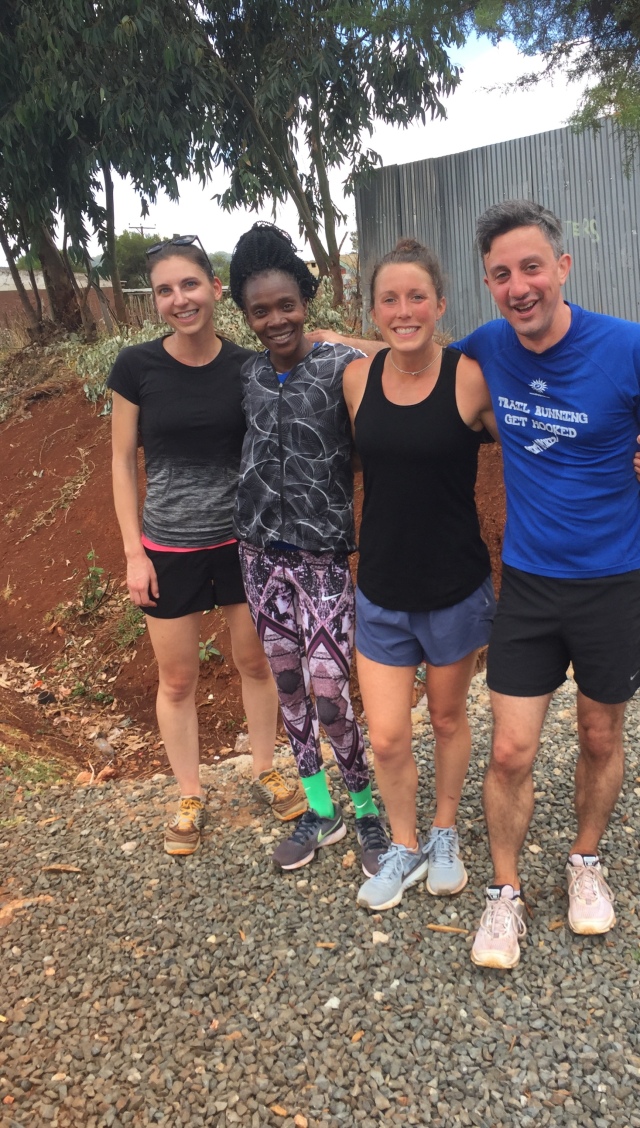
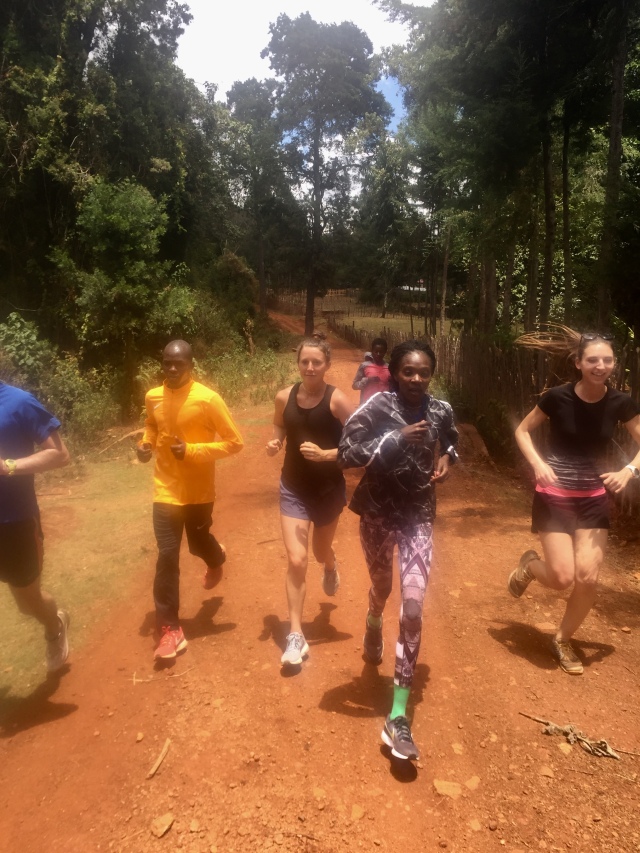
6:10AM – head out the door with Chelsea (a friend from college that came to visit me in Kenya!) to meet Julia (a Canadian I recently met and have become friends with) and Dickson (my pacer). Usually we travel down to a lower altitude and flatter road for a fast, supported long run. As the sun comes up, matatus (vans for hire) follow groups of gazelle-like striders, handing out bottles of water and whatever super nutrition is packed inside. I have been sick for the past few days, though, and didn’t know how far I’d make it, so this week we ran from my apartment at 7,800ft to Kipsang Rd (named after Wilson Kipsang because he owns a nightclub on it).

image2 (1)

There’s no matatu today, and how far we’ll all go is a mystery; it’s only Chelsea’s second day in Kenya! I immediately feel awful and we shuffle for a few warm up miles. After 3K we meet the gang, plus a new friend, Edward, who is Dickson’s neighbor. After a mile he lets it slip that he won the Marugame Half Marathon in 60 minutes earlier this month.

Then, he zips off, putting distance between us like we’re standing still. I start to warm up and we click off 7:10-7:20’s for the next few miles. The rolling hills remind me of Magnolia Rd in Boulder, Colorado.

image3 (1)

At 10 miles we turn around, and I pick up the pace a bit and distance myself from the group. Just as I was starting to feel really strong I ran into Edward again. To my surprise, he turned and ran with me. We immediately drop the pace. There’s like an inherent thought with Kenyan men that they should pace and push the women. For the next 8 miles I hung on as best I could as he kept looking back to make sure he wasn’t dropping me.

After 20 miles I was back at the paved road and 3K from home. I decided to catch a motor bike back home with Chelsea and be happy making it through 20 miles!

Watch data: 20 miles in 2:24:20. Elevation gain: 1,128ft

9AM – arrive home to a buffet of omelette, pancakes, and tea!

11:30AM – Chelsea and I walk through the local market. Every Saturday locals set up shops and sell their goods in a field by the center of town.

1:30PM – head home for green grams and rice! We are so spoiled!

3:30PM – second run! I don’t usually double after a long run, but I missed a couple of doubles during the week because I was sick. I take Chelsea through my favorite route in the Singore forest.

Watch data: 4.83miles in 41:23 (avg page: 8:34). Elevation gain: 341ft

5:30PM – Julia comes over to hangout with Chelsea and I!

6:30PM – YouTube interview with Greg White (watch it here).

7:30PM – dinner – chapati (a slightly sweet, thick and airy tortilla-like African staple. it’s typically dipped in stew, but it tastes great plain too), kale, lentil, butternut squash soup, and my favorite fruit salad of banana, mango, pineapple, and avocado.

It’s not typical in Kenya to have dessert, but fruit salad is a great, healthy alternative. I believe in eating a diet rich in whole foods and a minimal amount of processed foods. In the US, I don’t usually eat very many simple carbs like bread and opt for something like a sweet potato instead, but in Kenya I eat like a local.

10:30PM – full belly and lights out!

Total daily mileage: 25 miles! Continue reading “The Runner Diaries — Allie Kieffer”

In The Taper We Trust…Wait, Do We?

If you’re signed up for the United Airlines NYC Half, you’ve probably entered the period of your training that just might the most difficult: the taper.

For what it’s worth, the taper is typically the two or three week period leading up to a race when a training program starts ‘tapering off’, if you will, calling for less running, fewer miles, and more recovery.

If you’re wondering, ‘Wait! I thought the taper was a time to rest and relax! What’s so hard about that?’, well, the only way to answer that is to ask another question: Have you ever known a runner to be good at relaxing?

Sure, resting is good in theory — especially when paired with brunch and a delicious beer after a long run or hard workout. But after a day or two, most runners are itching to get back to work. Working hard, putting forth our best efforts, and breathing heavy just come naturally to endurance athletes.

While I’d love to applaud those who are motivated to run more throughout the taper period (while simultaneously wondering where the heck that motivation was during your last speed session….), as a running coach I firmly have to advise you to slow your roll and respect the taper period. A productive and effective taper will allow your body to repair, recover, replenish, and regroup before you tackle the biggest challenge of your training plan: race day.

Here’s how to make the most of your taper for a successful race.

1. Do Less

And I don’t just mean running less. Yes, reducing your weekly mileage is an important part of every taper, as resting your muscles means an increase in strength and power output, increases in VO2 max and a more efficient running economy. But don’t try to fill up the time you’d normally spend running doing a million other activities. Try to stay off of your feet as much as possible, and give yourself time to relax, sleep more, and actually rest. While overtapering is a real thing, it’s rarely as threatening as the draw of taking on more social or work commitments that can lead to exhaustion. Continue reading “In The Taper We Trust…Wait, Do We?”

The Runner Diaries — Willa Tellekson-Flash

Welcome to The Runner Diaries, where we’re sharing a behind-the-scenes look into a week of training with runners of varying ages, paces and GPS coordinates. Get The Runner Diaries delivered to your inbox, here.

This week, we have Willa Tellekson-Flash, a 21-year-old runner, writer, and student at New York University. Follow along as she balances her senior spring semester course load, an internship, a whole lot of fitness and peanut butter, and training for a spring half marathon.

The Run Down:

Name: Willa Tellekson-Flash
Location: New York, NY
Age: 21
Training For: NYCRUNS Ladies’ First Half, March 2018
Occupation: Student, Writer
Following a training plan? I have a fabulous running coach 😉
How long you’ve been ‘a runner:’ Around 5 years
Goal weekly mileage: Currently around 30 mi

Runner’s Statement:

I always hated running as a kid. I got a terrible side stitch, dreaded the timed mile in gym class, and was convinced that I just was not cut out for it. It wasn’t until I joined the crew team in high school that I started to use running as a way to try to improve my endurance, and to stay in shape when I spent a year in France and wasn’t rowing. I haven’t looked back since, and even though I don’t race very often, running has become a huge source of joy for me since moving to New York for college about 4 years ago.

Day One | Monday

IMG_2076

6:30am — I wake up and have a glass of water and a ginger shot before my run. Everyone has the flu in New York right now, and I’m doing everything in my power to make sure my cold doesn’t turn into the flu. By 7am I’m out the door for a run. I have an easy 45-60 minute run scheduled for today, so I run 6 miles at a comfortable 8:30 pace, and finish with some striders and stretches.

8:30am — I have a jar of overnight oats for breakfast that I made last night since I’m in a bit of a rush to head to class. Since I’ve reached a point in my training where I’m running more miles than my non-training norm, I feel like I’m hungry all the time, so I add a big scoop of coconut butter to my oatmeal to keep me full until lunch time. I also have a concoction of hot water, lemon, apple cider vinegar, and marine collagen that I make every morning before breakfast. I don’t like coffee, so this is my version of the drink that makes me feel set to start the day.

9am — Off to class! This semester, I’m working on my creative thesis, which consists of me writing a Sex Ed curriculum that is far more concerned with students’ emotional well being than simple biology instruction, and I have to give a presentation on my project this morning. I grab a bottle of Pressed Juicery Green Juice No. 5 from my fridge (a splurge… they were having a sale!) to sip on throughout the day.

IMG_2234

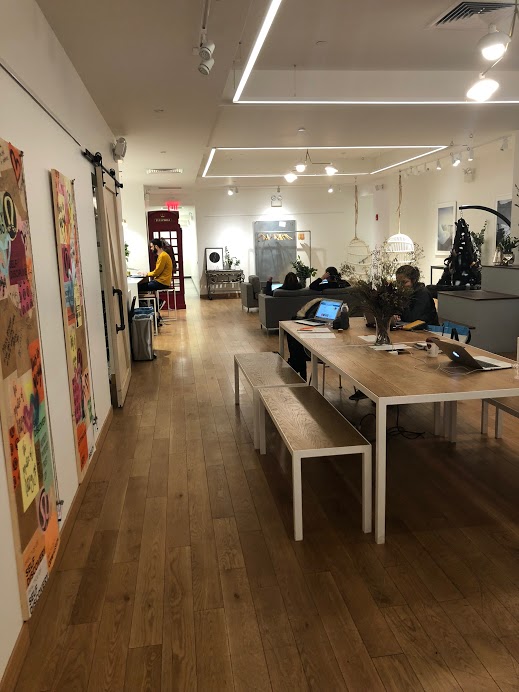
11am — I don’t have class again until dinnertime tonight, and I find the library at school extremely sad, so I’m always on the hunt for places to work that don’t require me to purchase $7 matcha lattes. A friend and I head to Hub Seventeen, a free workspace in the Flatiron lululemon store to get some work done.

12:30 PM — Lunchtime!

IMG_2233

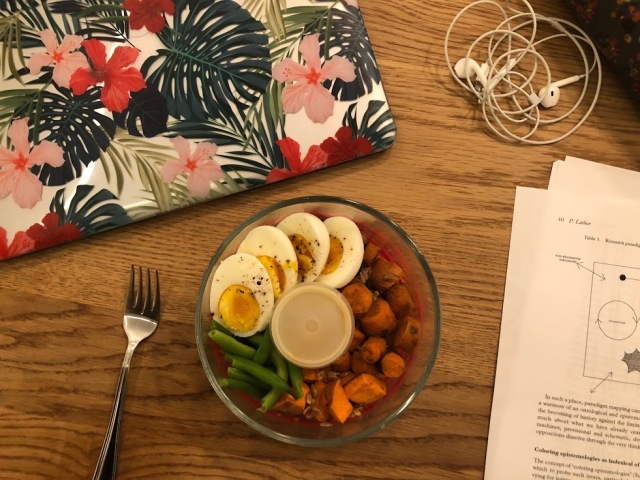
One of the best parts of working at a space that isn’t a café is that I can bring my own lunch, too. Using food that I meal prepped yesterday, I packed a bowl of steamed kale and green beans, roasted sweet potatoes and carrots, hard boiled eggs, sunflower seeds, and a peanut dressing that I made. I’m in general quite a healthy eater (I’m one of those lucky humans who loves vegetables), but I haven’t always had the healthiest relationship with food, so I try not to adhere to any specific diet too closely to avoid too much rigidity. That said, it’s easiest to describe me as a pescetarian. I do a fair amount of meal prep each weekend too, which helps keep me fueled and saves me a ton of money. I like to think carrying around my lunch and dinner tupperware counts as strength training too… 🙂

1:30pm — I pop up a block to Athleta to exchange a pair of running leggings for a different size. They have the best return policy… even though I bought these leggings a month ago, they let me exchange them no questions asked for not only a different size, but a pair with better pockets!

3:30pm — After a very productive afternoon, I walk home, have a snack, and do some more reading. I’m trying to take advantage of my last semester of college and the days when I have a little more flexibility in my schedule, so I curl up in bed for an hour with Bird by Bird, a great book on writing that I’m reading for a creative writing seminar, and a mug of vegan yogurt, granola (if you haven’t tried Purely Elizabeth’s Chocolate Sea Salt + Peanut Butter Granola, you haven’t yet lived… it’s that good), and blueberries. I do a little stretching and spend some time on my foam roller too, which is a bit of a challenge in my apartment as I seem to always knock something over, but my calves appreciate my efforts.

6pm— Back to school! My creative writing seminar goes from 6:30 to 9, so I bring my dinner with me to eat midway through class. It’s not all that different from lunch, but still tastes pretty darn good. I try to change it up a little, though, and have a bowl of quinoa, kale, green beans, carrots, turmeric tofu, peanut sauce, and sunflower seeds.

9:15pm — Today feels like it’s been a long one. I make myself a mug of peppermint tea, lather a rice cake with peanut butter and add some banana, and do a little more work for school.

10:15pm— I’ve started putting technology away between 10 and 10:30 so that I can properly wind down before I go to sleep. It’s tough to get myself to do it, because lying in bed and scrolling through Instagram can be rather tempting, but I’ve been sleeping so much better. I also diffuse lavender essential oil in my room at night, which makes the whole going to bed thing extra calming. My lights are out by 11.

Total Miles: 6 Continue reading “The Runner Diaries — Willa Tellekson-Flash”

Negative Splits with Coach EK, Volume II

Today, the second edition of Negative Splits with Coach EK, my running-focused newsletter, was sent out! Check out the below for a sample of some of the musings, workouts, and relevant running-related things you’ll find, and subscribe if you want to get them weekly!

The Run Down

What happened in the world of running this past week? Well, way more than I could actually ever address. But some highlights include…

  • The American Women’s 4×800-meter relay team broke the World Record on Saturday, right here in New York City at the Millrose Games. Their time was 8:05.89. As a high school 800-meter runner, the 2-min splits of the relay members are just gnarly to me. My best time ever was a 2:25 split, and I got beat out by a girl who peed her pants. Way to go, ladies! | via Runner’s World
  • Hawaii legislators were just denied a bill that would limit marathons and half marathons to the 18-and-over crowd under the claim that ‘distance running is bad for children.’ But here’s the thing — there’s no science to back that up. So, it got the boot. While I find it a little odd that kids as young as 10 and 12 are running 26.2 miles (I didn’t run my first marathon until I was 22!), I think it’s a much healthier alternative to some of the other activities kids engage in — like playing video games 24/7, or… uh, tackle football. | via Flotrack
  • TYSK* (Term You Should Know): Plogging,” which is a Scandinavian term and practice that asks runners to pick up litter along their jogging routes. While I don’t recommend doing this during your next speed workout, your long run could probably use a few distractions…. | viamindbodygreen
    • *I made this up.

Worthwhile Reads…

Molly Huddle and the Perks of Running Dangerously

To be totally honest, I have been known to catch myself playing it safe in races. I know that’s not how to PR or really take advantage of my full strength, but I fear the alternative — which is going out too fast and possibly crashing hard later on. In this piece for Outside Online, Molly Huddle acknowledges “blowing up” (or burning out) in the last few miles of the Aramco Houston Half Marathon after starting the race at an aggressive pace. Yet despite her fade, Huddle ran a 1:07:25, breaking the American record.

  • TL;DR? Sometimes, it pays to take a risk — especially in shorter distances (read:not the marathon). No, that doesn’t mean you should be totally reckless in your next race. Even Huddle knew she wouldn’t be able to keep up that pace forever — but she wanted to see where the line was. So, I’m challenging you to find YOUR line. It may be uncomfortable, and you very well could bottom out. BUT, you could also break some (personal) records.

Workout of the Week: The Call To Adventure: 20 x 400m

This workout comes from Michael Joyner, a human performance expert at Mayo Clinic. I read about it in a Runner’s World article over a year ago, but haven’t had an athlete bold enough to try it yet (myself included).

The workout:

  • 20 x 400-meter repeats with a 200-meter recovery jog in between each interval.

Get the full workout (and the rest of the newsletter) here.

Is Strava Compromising YOUR Safety?

As a runner who is actively training for the Boston Marathon, I use Strava just about every day. Syncing my daily runs and workouts —other than Fridays, my coveted rest day — isn’t even a decision anymore. When I upload my run to my watch’s (the Epson Prosense 307 GPS) corresponding app, it syncs my workouts to Strava automatically.

There is, however, one continuous, unconscious effort I have to make — other than naming my workout something obscure or after a song lyric or quote that has been stuck in my head for the majority of my workout. And that is making my workout ‘public.’ I always click the master lock icon so that it shifts from it’s ‘locked’ position into an open one.

After all, if I just wanted to see my workout times and splits, I could just look through my watch history, or analyze data more thoroughly on the app.  But since I want my friends (and the larger athletic community in general) to see my hard work, I make sure each run, swim, and bike ride is visible to my friends and followers. (And to be totally honest, I also want the kudos. Really badly.)

A lot of runners and athletes have a likeminded approach when it comes to their training. Runners are instinctively communal, and competitive. We want the larger running community to see our efforts, and we want to see what others are doing to become faster, better, and stronger runners. And it’s not just our friends that Strava allows us to connect with — we can also track and follow along with the training and musings of professional runners (think: Allie Kieffer) and influential individuals within the sport (like Kelly Roberts).

I should also take into account that we live in the overshare economy, where nothing really happens if you don’t post about it on social media. (It doesn’t. DOES IT?!)

Regardless, we’re posting about our whereabouts — through Snapchat, Facebook, Instagram, and now, Strava — more often and more regularly now than ever before. The only difference between Strava and other social apps is that Strava maps out and pinpoints our exact coordinates — especially at times we’re prone to riding solo — as well as potential patterns in our schedules. And that can be a problem.

It’s definitely a problem for national security, as we found out last week that the fitness tracking app was outing sensitive data, like the locations of US soldiers and military bases, through its heat mapping tool. But it can also be a problem for your individual security.

While I’ve written publicly before about why I won’t stop running alone, even though it makes me feel unsafe, I don’t mean that it’s okay to be negligent. While I won’t advocate against posting and sharing your splits and routes to Strava, for a number of reasons — because getting #kudos is awesome, because I’ve used the app to discover new routes for long bike rides during ironman training, and because I think it’s a great way to motivate yourself and gauge progress —I will advocate for distributing and withholding your information in a smart way.

Like, putting yourself on ‘private’ for example, or managing your settings so that only people you accept can see your data and maps. Perhaps refrain from sharing any runs that could lead anyone directly back to your apartment or home (I try to stop my watch a few streets away from my doorstep — and, Editor’s Note, Nicole Gilbert on Twitter tipped me off to the fact that Strava has a privacy setting that actually allows you to create a privacy zone around your home, office, or whatever base you prefer). And if you run super regularly — like, always the same route, at the same time, every single day — maybe think about mixing up your route (at least, publicly) once in awhile to make it harder for anyone to track your behaviors or routine. While it’s uncomfortable to think about someone using what should be an amazing social running tool to take advantage of you, unfortunately, it is a possibility. Especially for women.

So do yourself — and the good PR folks at Strava — a favor, and check yourself and your sharing habits. There’s probably something you can be doing to keep your private information more secure. You might not be wreaking of sensitive information like the US military, but your safety is still pretty important.

Subscribe here for thoughts and musings from Coach EK delivered directly to your inbox.

The Runner Diaries — Max Beitel

Welcome to The Runner Diaries, where we’re sharing a behind-the-scenes look into a week of training with runners of varying ages, paces and GPS coordinates. Get The Runner Diaries delivered to your inbox, here.

This week we have 28-year-old Max Beitel. Max is currently stationed in Crete, Greece with the United States Navy. A long time weightlifter and fitness enthusiast, Max got hooked on running as an adult and finished his first ultra marathon (a 72k) in 2015. Today, he strives to balance living a healthy lifestyle with his thirst for adventure sports like trail running, rock climbing and canyoning (more on that, later).

The Run Down

Name: Max Beitel
Location: Crete, Greece
Age: 28
Training For: Living the healthiest life I can, physically and psychologically.
Goal race: You never know what race may be the one.
Training plan: Just winging it.
How long you’ve been ‘a runner’: We are all runners at heart. When we are born at first crawl, then walk, and as soon as we can, we run. Many of us get comfortable and succumb to social norms of stagnancy and stop running. There is a runner at the core of us all. Some just act on it, I suppose I am one of them.
Goal weekly mileage: Erm, as many miles as it takes to get me across the finish line.

Runner Statement:

I started running because of my brother’s wife (thank you, Lily!). When they started dating, Lily got him hooked on the sport, and soon, so was I. Up until then I was strictly a weight lifter, focusing on PRs and laughing at the thought of cardio. Our first race was a 7-mile trail race. My brother Christian and I finished 1st and 2nd in our age group. We may or may not have been the only two runners in said age group, but I’ll take it…

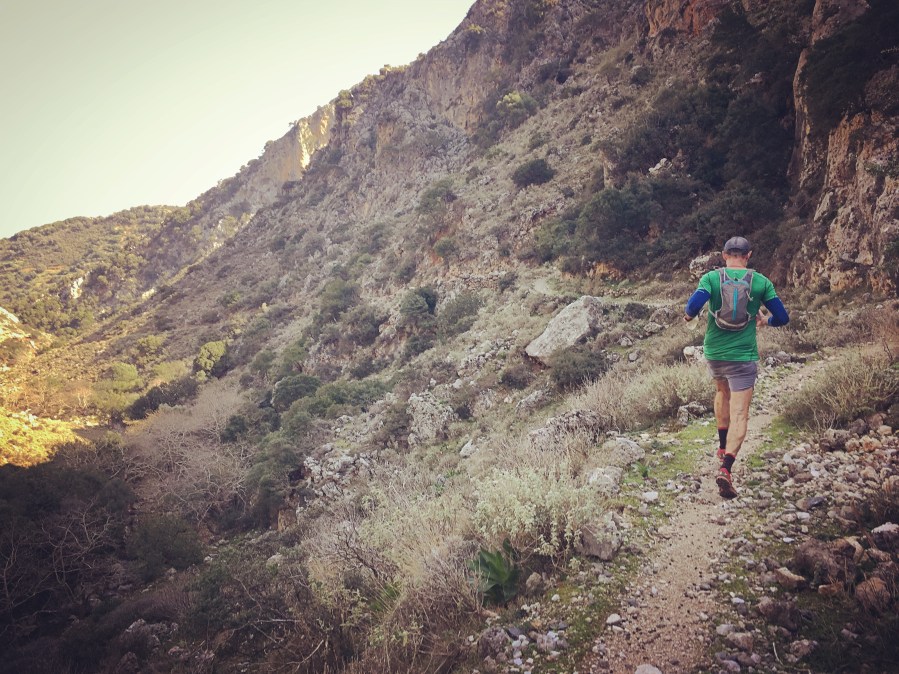
Soon after that race, I started getting into triathlons and focusing more on endurance sports. I joined the Navy in the fall of 2015 and found myself stationed on the most incredible island, Crete. I had recently discovered the world of ultra marathons and the ever growing trail running scene, and craved the adventure. Initially upon my arrival in Greece, the goal was to run the Athens Marathon but that was soon replaced by a 72k in France. Upon finishing the run, I was hooked.

Ever since, I have been using running to explore as much as the island I am lucky to call my home. I try to stay well-rounded and am also big on rock climbing and Crossfit / HIIT-style workouts. Although climbing tends to limit my running, I think the experience it provides is invaluable and I have no reservations about nixing a long weekend run for a full day of climbing.

My workouts, both running and HIIT workouts are a combination of knowledge I have accrued over the years through reading and Instagram. Sometimes I do a predetermined Crossfit WOD, but more often I do my own thing. Anything that keeps me on my toes, and pushing myself is a good workout. I try to make every workout full body but change up the movements. Sometimes I will get hooked on a movement and incorporate several workouts in a row. As far as running. I try to alternate my “hard” runs or run-workouts with “easier” slow paced runs. At the end of the day, I strive for an overall level of fitness.

Day One – Monday

0530: Wake up eat a Banana, drink some water.

0610: My morning workout is “Chelsea,” which is Crossfit lingo for:

– @ bodyweight 5-pullups, 10-pushups, 15-squats every minute on the minute   for 30 minutes.

My morning workouts vary, but I like this routine in particular because it’s quick, simple, and doesn’t require equipment.

0730: Breakfast is 3 Hard boiled egg(whites), half a grapefruit, another banana,1 avocado, half cup of coffee, one pancake.

0800: Start work.

0930: Get hungry, I have a bacon sausage double egg cheese tomato on whole wheat.

1100: Lunch time: Chicken, Rice, Large Salad

1400: Another half cup of coffee

1650: Run:

– 5 miles total: 2.5-mile warm up; 7 strides; :30s on, 1:30 off.

1750: Dinner: Pork chop, some mashed potatoes. Salad with chicken, olive oil, lemon and some blue cheese dressing.

1820: Gym time:

– 8 Weighted pull-ups @25#s, 5 single-arm shoulder press @50#s,5 handstand pushups,  decline ab work.

1920: I work on this Run Diary + have a shake (1 egg, two bananas, almond milk, orange juice) Pretzels, string cheese, more dark chocolate.

2000: Shower, stretch, catch up with family and friends back home (time difference struggle!), finish watching Dead Poets Society, and catch an episode of Bob Ross on Netflix

2200: Sleep time!

**Reflecting on the day, I realize I tend to do this — “this” meaning overdoing it. I do it to myself every once and a while when I feel good and motivated. I also eat the same things during the week so I will spare you further details. I try to eat paleo-ish but have no problem indulging. Life is too short not to enjoy the things you love.

Daily Mileage: 5 miles +/- 500ft uphill Continue reading “The Runner Diaries — Max Beitel”

Negative Splits With Coach EK

I’ve decided to start a running-focused newsletter: Negative Splits with Coach EK!

This digital newsletter will give you a RUN DOWN (pun intended) of timely news and trends in the world of endurance sports, coaching advice and tips from yours truly, and random thoughts and musings for a more productive, better, efficient, happy, wonderful life (at least, that’s the dream).

You can check out the beginning (below), the full version here, and subscribe if you like it.

The Run Down

A lot of stuff happened in the running world this week, but the biggest thing to happen was the realization that Strava heat maps might be compromising American military base safety. I want to write about this in more detail, but honestly, we could all probably check our security settings when it comes to our Strava profiles. Especially women. Do you run straight back to your front door after  a run?

If your profile is public, then your home is literally on display for the whole world to see. Consider making your profile private, not posting a super consistent and/or regimented running routine if you run alone often, or stopping your watch a few blocks from your actual home. Call me paranoid, but honestly, these are valid things to think about.

Other Headlines:

  • Will Carrying A Phone Affect Your Running Form? TL;DR? Actually, yes. I recommend not carrying a phone if you can help it. Smart phones have gotten SO HEAVY, it’s almost impossible for it to not weigh heavily on whatever side you are carrying it on (thus compromising your form). If you NEED music to run, invest in an iPod shuffle (or a cheaper option). Ditching your phone will also be less distracting, especially if you’re prone to getting notifications during a run. If you need to run with your phone for safety reasons — or for tracking your mileage — invest in a running belt and keep it there (inside a ziplock bag, of course, because sweat).
  • How To Strengthen Your Mental Game With Kara GoucherTL;DR? The more I learn about coaching and sport psychology, the more I realize that your mental game can be just as, if not more important than your physical talent and/or strength. In this interview, Kara Goucher shares why she keeps a Confidence Journal, where she forces herself to write ONE positive thing about her workout, even if she has a terrible, no good, very horrible run. I love this idea — whether you apply it to your running regime, or your every day life in general. Finding ONE positive thing can help slow negative feelings from snowballing, and set you up mentally for a better tomorrow.

You can read the full version here.

A Look Back At 2017

They say you shouldn’t look back — that what’s in the past should stay in the past; it’s there for a reason. Yet while it can be counterproductive to revisit the past in many contexts, it can also be a helpful exercise in growing and moving forward.

2017 was an interesting year, to say the least. Despite feeling stuck in a lot of ways, time progressed anyway. Things happened, deadlines came and went, and relationships grew and grew apart.  And now, the year is nearly over.

What I have to show for it all isn’t anything spectacular. It’s mostly etched in internet postings and race times. But I wanted to sit down and think about it all.

Below, you’ll find a significant story I wrote, blog post I published, or race/running-related result from 2017. Continue reading “A Look Back At 2017”